Country Music Star Troy Gentry Was Fatally Injured When The Aircraft Impacted Terrain
The NTSB has released its probable cause report from an accident which occurred on September 8, 2017 that fatally injured country music star Troy Gentry.
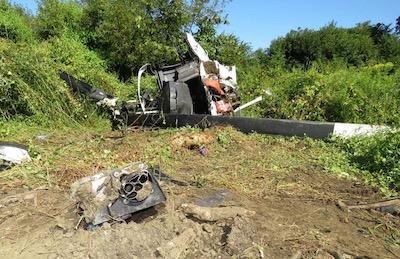
The purpose of the flight was to provide an orientation/pleasure flight to Gentry, who was scheduled to perform in a concert on the airport later that evening. Several minutes after takeoff, the pilot reported over the airport UNICOM frequency that he was unable to control engine rpm with throttle inputs. He reported that he could "roll" the twist-grip; however, there was no corresponding change in engine power when he did so.
Three helicopter flight instructors, one an FAA inspector, one an FAA designated examiner, and a company flight instructor, joined the conversation on the radio to discuss with the pilot remedial actions and landing options. These options included a shallow, power-on approach to a run-on landing, or a power-off, autorotational descent to landing. The instructors encouraged the pilot to perform the run-on landing, but the pilot reported that a previous run-on landing attempt was unsuccessful. He then announced that he would shut down the engine and perform an autorotation, which he said was a familiar procedure that he had performed numerous times in the past. The instructors stressed to the pilot multiple times that he should delay the engine shutdown and autorotation entry until the helicopter was over the runway surface.
Video footage from a vantage point nearly abeam the approach end of the runway showed the helicopter about 1/4 to 1/2 mile south of the runway as it entered a descent profile consistent with an autorotation. Toward the end of the video, the descent profile steepened and the rate of descent increased before the helicopter descended out of view. Witnesses reported seeing individual rotor blades as the main rotor turned during the latter portion of the descent.
The increased angle and rate of descent and slowing of the rotor blades is consistent with a loss of rotor rpm during the autorotation. Despite multiple suggestions from other helicopter instructors that he initiate the autorotation above the runway, the pilot shut down the engine and entered the autorotation from an altitude about 950 ft above ground level between 1/4 and 1/2 mile from the end of the runway. Upon realizing that the helicopter would not reach the runway, the pilot could have landed straight ahead and touched down prior to the runway or performed a 180° turn to a field directly behind the helicopter; however, he continued the approach to the runway and attempted to extend the helicopter's glide by increasing collective pitch, an action that resulted in a decay of rotor rpm and an uncontrolled descent.
Examination of the wreckage revealed evidence consistent with the two-piece throttle control tie rod assembly having disconnected in flight. The internally threaded rod attached to the bellcrank and an externally threaded rod-end bearing attached to the throttle control arm displayed damage to the three end-threads of each. The damage was consistent with an incorrectly adjusted throttle control tie rod assembly with reduced thread engagement, which led to separation of the rod end bearing from the tie rod and resulted in loss of control of engine rpm via the throttle twist grip control.
The NTSB determined that the probable cause of this accident was the pilot's early entry into and failure to maintain rotor rpm during a forced landing autorotation after performing an engine shutdown in flight, which resulted in an uncontrolled descent. Contributing to the accident was the failure of maintenance personnel to properly rig the throttle control tie-rod assembly, which resulted in an in-flight separation of the assembly and rendered control of engine rpm impossible.
(Image from NTSB docket)



 ANN's Daily Aero-Term (12.04.25): Cooperative Surveillance


 See All