Wed, Oct 12, 2011
Spacecraft Will Measure Solar Wind, Study Process That Creates
The Phenomenon
NASA will begin development and testing of two science
instruments, in cooperation with the European Space Agency (ESA),
to be placed on ESA's newly selected Solar Orbiter mission. The
spacecraft will study the sun from a closer distance than any
previous mission. At its closest approach, the European-led project
will operate approximately 21 million miles from the sun's surface,
near the orbit of Mercury, roughly 25 percent of the distance from
the sun to the Earth. This unique vantage point will enhance the
ability to forecast space weather.
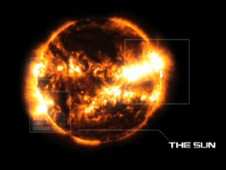
Space weather produces disturbances in electromagnetic fields on
Earth that can induce extreme currents in wires, disrupt power
lines and cause widespread blackouts. These sun storms can
interfere with communications between ground controllers and
satellites and with airplane pilots flying near Earth's poles.
Radio noise from the storms also can disrupt cell phone
service.
"Solar Orbiter is an exciting mission that will improve our
understanding of the sun and its environment," said Barbara Giles,
director for NASA's Heliophysics Division in Washington. "This
collaboration will create a new chapter in heliophysics research
and continue a strong partnership with the international science
community to complement future robotic and human exploration
activities."
Solar Orbiter will be close enough to the sun to sample solar
wind shortly after the wind has been ejected from the sun's
surface. Additionally, the spacecraft will observe in great detail
the process that accelerates the wind on the sun's surface. Data
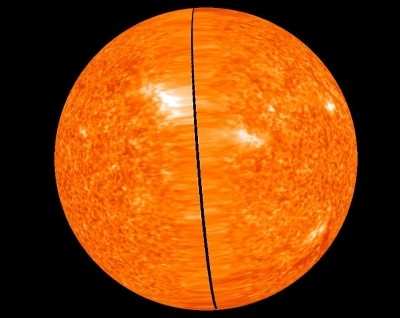
will provide views of the sun's polar regions and far side. The
spacecraft's elliptical orbit will allow it to follow the star's
rotation, enabling observations of specific areas for much longer
than is currently possible.
Launch is planned for 2017 from Cape Canaveral Air Force
Station, FL, aboard a NASA-provided expendable launch vehicle.
Among the science investigations, two instruments valued at $80
million are provided by NASA:
- The Solar Orbiter Heliospheric Imager (SoloHI), which will
provide revolutionary measurements to pinpoint coronal mass
ejections or CMEs. CMEs are space weather events with violent solar
eruptions that travel from 60 miles per second to more than 2,000
miles per second with masses greater than a few billion tons.
Russell Howard from the Naval Research Laboratory in Washington is
principal investigator.
- The Heavy Ion Sensor (HIS), one of a suite of sensors that will
measure density, velocity, and temperature of the solar wind.
Stefano Livi from the Southwest Research Institute in San Antonio
is principal investigator.
More News
"The owners envisioned something modern and distinctive, yet deeply meaningful. We collaborated closely to refine the flag design so it complemented the aircraft’s contours w>[...]
Nonradar Arrival An aircraft arriving at an airport without radar service or at an airport served by a radar facility and radar contact has not been established or has been termina>[...]
From 2022 (YouTube Edition): Still Life with Verve David Uhl was born into a family of engineers and artists—a backdrop conducive to his gleaning a keen appreciation for the >[...]
Also: Electra Goes Military, Miami Air Taxi, Hypersonics Lab, MagniX HeliStrom Amazon’s Prime Air drones are back in the spotlight after one of its newest MK30 delivery drone>[...]
Also: Trailblazing Aviator Betty Stewart, Wind Farm Scrutiny, Chatham Ban Overturned, Airbus Shares Dive A Thunderbird pilot, ID'ed alternately as Thunderbird 5 or Thunderbird 6, (>[...]



 Aero-News: Quote of the Day (12.11.25)


 See All