Mon, Feb 07, 2022
GAMA, NBAA, Want More Feedstocks Under Consideration and Boosted SAF Output
A broad spectrum of aviation interests and industry groups have urged the EPA to create more opportunities for the development of sustainable aviation fuel as the agency looks to update the federal Renewable Fuel Standard.
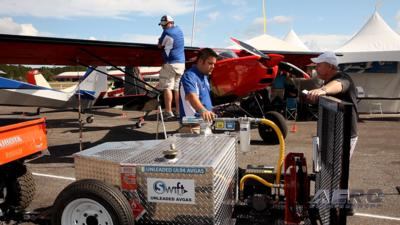
The coalition believes that the updated program, which has seen little change since its inception in 2005, needs to include changes to the industry to incorporate nearly 2 decades of technological progress.
The GAMA, HAI, NATA, NBAA, and more urge EPA Administrator Michael Regan to expand the list of eligible feedstocks from the somewhat limited range allowed before. Under the original list, only biocrude, fatty acid, and undenatured ethanol were ruled as biointermediates, but newer systems like woody biomass or biocrude have since been developed. Those new feedstocks enable an even further recapture of energy byproducts, allowing for even more renewable fuels to be created from material that would normally be disposed of. If the biointermediate section of the rule is updated, then the "second part of the proposal is to ensure that the volumes for cellulosic, noncellulosic advanced and biomass-based diesel are set at levels that will increase the volumes of each of these fuels from an SAF perspective."
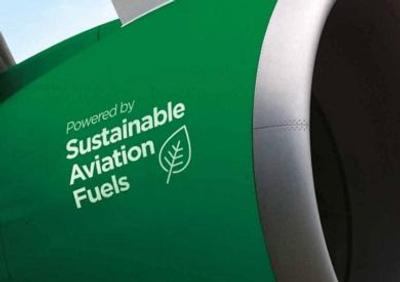
Should those admonitions be put into the new RFS, then a sizable shift in the volumes of new fuels for historically lower-producing categories could arise in short order. Increased volumes of sustainable aviation fuel are the overriding goal for the coalition, which says "Looking forward to 2023 and beyond, EPA has a unique opportunity to grow SAF volumes through the RFS program. Our coalition looks forward to collaborating with you as the companies we work with develop new opportunities for production. Historically, EPA has done an excellent job of tracking renewable fuels in the U.S. market. Our coalition will work with you to ensure that you have a forward looking view of SAF as follows: First, actual production. Second, production under construction. Finally, facilities under substantial development," the letter says, outlining the sequence of SAF development after the RFS. "The ongoing development of biointermediates, feedstocks and process technologies will determine how quickly the volume of
actual production will increase."
More News
Cooperative Surveillance Any surveillance system, such as secondary surveillance radar (SSR), wide-area multilateration (WAM), or ADS-B, that is dependent upon the presence of cert>[...]
Aero Linx: OX5 Aviation Pioneers Incorporated in 1955 as a Pa 501 (c)(3) Not for Profit Corporation, the OX5 Aviation Pioneers is dedicated to bringing before the public the accomp>[...]
The Pilot Appeared To Regain Control After Six Rotations And Attempted To “Fly Out” Inverted But Had Insufficient Altitude On November 8, 2025, at 1038 eastern standard>[...]
From 2018 (YouTube Edition): Aero-News Talks With The Airplane's Builder One of the many unique airplanes at AirVenture 2018 was a 1/3-scale B-17 bomber built by Jack Bally, who ta>[...]
Aero Linx: Society of U.S. Army Flight Surgeons (SoUSAFS) The Society of US Army Flight Surgeons (SoUSAFS) serves to advance the science and art of Aerospace Medicine and its allie>[...]



 ANN's Daily Aero-Term (12.04.25): Cooperative Surveillance


 See All