
China Lands Spacecraft Of The Far Side Of The Moon | Aero-News Network
Aero-News Network
RSS icon RSS feed
podcast icon MP3 podcast
Subscribe Aero-News e-mail Newsletter Subscribe

Airborne Unlimited -- Most Recent Daily Episodes

Episode Date

Airborne-Monday

Airborne-Tuesday

Airborne-Wednesday Airborne-Thursday

Airborne-Friday

Airborne On YouTube

Airborne-Unlimited-12.01.25

AirborneNextGen-
12.02.25

Airborne-Unlimited-12.03.25

Airborne-AffordableFlyers-11.20.25

AirborneUnlimited-11.21.25

LIVE MOSAIC Town Hall (Archived): www.airborne-live.net

Sat, Jan 05, 2019

China Lands Spacecraft Of The Far Side Of The Moon

Signals Maturity Of Chinese Space Program, Analysts Say

China has landed a spacecraft on the far side of the moon, the first time a lander has made a soft touchdown on that part of the body.

Ars Technica reports that, according to state-run media in China, the Chang'e-4 lander touched down early in the week in the Von Karman Crater in the South Pole-Aitken Basin. The region is in the mid-southern latitudes of the Moon on its far side.

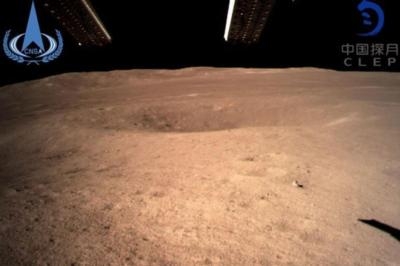
Shortly after arrival, the lander sent back a photo of the lunar surface via its Queqiao relay satellite in lunar orbit. The lander carried a rover called Yutu II (Jade Rabbit II) which will collect high-resolution images of the surface, as well as study the surface and material just below the surface as well as the radiation environment on that side of the Moon.

The landing marks the first time a man-made object made a soft landing on the far side of the Moon. NASA Administrator Jim Bridenstine posted a message to the Chinese on Twitter shortly after announcement. "Congratulations to China’s Chang’e-4 team for what appears to be a successful landing on the far side of the Moon. This is a first for humanity and an impressive accomplishment!" he wrote.

China provided no live coverage of the landing. Many of the country's more difficult space efforts are only reported if they are successful, much in the same way the Soviets covered their space program in the 1960s.

The Washington Post reports that Alan Duffy, a lead scientist with the Royal Institution of Australia who focuses mainly on space exploration, called the landing a "clear statement about the level of maturity that China’s technology has now reached. Beijing’s longer-term goal to match U.S. capabilities could now become reality within two decades, and on the moon within perhaps only one decade."

China has publicly said it plans to land humans ... "Taikonauts" ... as early as 2030.

(Image released by the Chinese government)

FMI: Source report, Source report

Advertisement

More News

Classic Aero-TV: VerdeGo Debuts VH-3 Hybrid-Electric Powerplant

From 2023 (YouTube Edition): New Propulsion Scheme Optimized for AAM Applications Founded in 2017 by Eric Bartsch, Pat Anderson, and Erik Lindbergh (grandson of famed aviation pion>[...]

NTSB Prelim: Grumman American Avn. Corp. AA-5B

During The Initial Climb, The Engine Began To Operate Abnormally And, After About Three Seconds, Experienced A Total Loss Of Power On October 29, 2025, about 1820 Pacific daylight >[...]

ANN's Daily Aero-Linx (12.02.25)

Aero Linx: Women in Aviation International Women in Aviation International is the largest nonprofit organization that envisions a world where the sky is open to all, and where avia>[...]

Aero-News: Quote of the Day (12.02.25)

“We’ve paid for the cable line’s repair for the customer and have apologized for the inconvenience this caused them...” Source: Some followup info from an A>[...]

Aero-News: Quote of the Day (12.03.25)

“We have long warned about the devastating effects of pairing optimization. Multiple times over many months, we highlighted how schedule manipulation, unbalanced schedules, a>[...]

blog comments powered by Disqus



Advertisement

Advertisement

Podcasts

Advertisement

© 2007 - 2025 Web Development & Design by Pauli Systems, LC

