
Qantas Says 747 Incident May Lead To Fleetwide Changes | Aero-News Network
Aero-News Network
RSS icon RSS feed
podcast icon MP3 podcast
Subscribe Aero-News e-mail Newsletter Subscribe

Airborne Unlimited -- Most Recent Daily Episodes

Episode Date

Airborne-Monday

Airborne-Tuesday

Airborne-Wednesday Airborne-Thursday

Airborne-Friday

Airborne On YouTube

Airborne-Unlimited-12.08.25

AirborneNextGen-
12.09.25

Airborne-Unlimited-12.10.25

Airborne-AffordableFlyers-12.11.25

AirborneUnlimited-12.05.25

AFE 2025 LIVE MOSAIC Town Hall (Archived): www.airborne-live.net

Thu, Jan 10, 2008

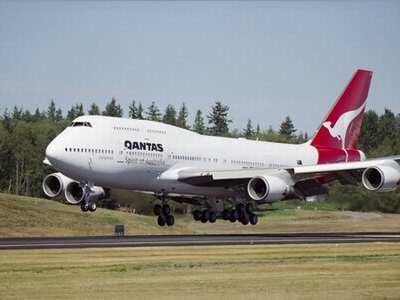
Qantas Says 747 Incident May Lead To Fleetwide Changes

Leaking Galley Drip Tray Leads To Loss Of Electrical Power

Australia's Transport Safety Bureau and Civil Aviation Safety Authority, Boeing and Qantas are all involved in an investigation into an incident Monday, in which a Qantas 747 flying 344 passengers from London to Bangkok lost main electrical power during its descent.

The Australian reports a cracked drip tray below the plane's first-class galley allowed water to drip into a generator control unit. Cabin lighting went out, but cockpit functions continued on battery power to allow pilots to make an otherwise routine landing.

"It happened at 15,000ft, so already descending on approach, and I think the first thought was 'get the aeroplane down', which was quite right," said David Cox, Qantas executive general manager for engineering. "Had they been presented with the challenge with more time in the air, there are other things they could have tried.

"It was just like tipping a glass of water into your stereo," Cox said of the incident. "It is not a good thing for that sort of equipment to have happen to it."

The paper quoted unnamed aviation sources who said the battery backup system, which is supposed to guarantee 30 minutes of operation to critical systems, probably would have lasted more like an hour... but the situation would still have been grave if it happened when the plane was more than an hour from a suitable landing site.

Cox told the paper he expects the incident to prompt an alert to other operators of the plane from Boeing, and possibly regulatory action.

"At the moment, we're out inspecting the fleet and looking to see where that water may have come from, and what steps we need to take to stop that water getting in there again," he said. "Obviously correcting the drip tray is an immediate action but that's a relatively simple thing to do. The bigger concerns are around how the water got there, and how we protect the avionics better."

FMI: www.boeing.com, www.qantas.com

Advertisement

More News

Aero-News: Quote of the Day (12.09.25)

“We respectfully call on the City of Mesa to: 1. Withdraw the landing fee proposal immediately 2. Engage with the aviation community before making decisions that impact safet>[...]

ANN's Daily Aero-Term (12.09.25): High Speed Taxiway

High Speed Taxiway A long radius taxiway designed and provided with lighting or marking to define the path of aircraft, traveling at high speed (up to 60 knots), from the runway ce>[...]

ANN's Daily Aero-Linx (12.09.25)

Aero Linx: International Federation of Airworthiness (IFA) IFA uniquely combines together all those with responsibility for policies, principles and practices concerned with the co>[...]

NTSB Final Report: Diamond Aircraft Ind Inc DA20C1 (A1); Robinson Helicopter R44

Controller’s Expectation That VW02 Would Have Departed Sooner Led To An Inadequate Scan And Loss Of Situational Awareness Analysis: A Robinson R-44 helicopter N744AF, VW02 (V>[...]

ANN FAQ: Q&A 101

A Few Questions AND Answers To Help You Get MORE Out of ANN! 1) I forgot my password. How do I find it? 1) Easy... click here and give us your e-mail address--we'll send it to you >[...]

blog comments powered by Disqus



Advertisement

Advertisement

Podcasts

Advertisement

© 2007 - 2025 Web Development & Design by Pauli Systems, LC

