
Aerion Expands Collaboration With NASA | Aero-News Network
Aero-News Network
RSS icon RSS feed
podcast icon MP3 podcast
Subscribe Aero-News e-mail Newsletter Subscribe

Airborne Unlimited -- Most Recent Daily Episodes

Episode Date

Airborne-Monday

Airborne-Tuesday

Airborne-Wednesday Airborne-Thursday

Airborne-Friday

Airborne On YouTube

Airborne-Unlimited-12.01.25

AirborneNextGen-
12.02.25

Airborne-Unlimited-12.03.25

Airborne-FltTraining-12.04.25

AirborneUnlimited-12.05.25

AFE 2025 LIVE MOSAIC Town Hall (Archived): www.airborne-live.net

Fri, Jun 08, 2012

Aerion Expands Collaboration With NASA

Includes Supersonic Design Code Maturation

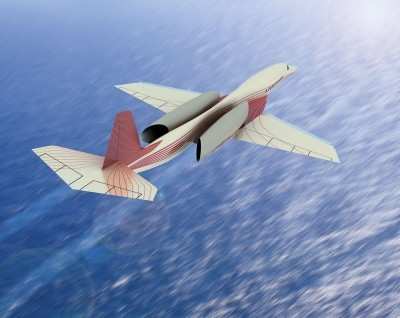
An expansion of the collaboration between Aerion Corporation and NASA's Glenn Research Center was announced Monday. The two will work together to mature NASA’s new SUPIN (SUPersonic INlet) computer code, which has been developed to perform aerodynamic design and analysis on engine inlets for future high-speed aircraft, such as Aerion’s planned supersonic business jet (SBJ).

Aerion and NASA collaborate on inlet design and advanced boundary layer control methods to achieve efficient and stable supersonic inlet operation without boundary layer bleed. The use of bleed reduces efficiency, as well as increases cost and complexity. Thus, a no-bleed inlet could benefit SBJ performance in anticipated real-world operating conditions. Collaboration with NASA on their SUPIN code began this month and is expected to last approximately one year.

“Our collaborative effort with NASA Glenn to mature the SUPIN supersonic inlet design code builds on our existing relationship with NASA Dryden and both partnerships could pay dividends for years to come in the form of faster and more efficient flight,” said Dr. Richard Tracy, Aerion’s chief technology officer.

This arrangement, made possible through a Space Act Agreement, is in addition to the company’s ongoing collaboration with NASA’s Dryden Flight Research Center on another round of supersonic F-15B flights featuring an Aerion test article. The additional flights, scheduled for this summer, are intended to evaluate supersonic boundary layer transition properties as they relate to manufacturing standards for surface quality and assembly tolerances. These flights and the engine inlet design code maturation project represent two vital elements in the company’s plan to design the world’s first supersonic business jet. (Image provided by Aerion)

FMI: www.nasa.gov, www.aerion.com

Advertisement

More News

Aero-FAQ: Dave Juwel's Aviation Marketing Stories -- ITBOA BNITBOB

Dave Juwel's Aviation Marketing Stories ITBOA BNITBOB ... what does that mean? It's not gibberish, it's a lengthy acronym for "In The Business Of Aviation ... But Not In The Busine>[...]

NTSB Prelim: Rutan Long-EZ

The Pilot Attempted Several Times To Restart The Engine And Diverted To Long Beach Airport/Daughtery Field On October 20, 2025, about 1603 Pacific daylight time, an experimental am>[...]

ANN's Daily Aero-Term (12.05.25): Hazardous Weather Information

Hazardous Weather Information Summary of significant meteorological information (SIGMET/WS), convective significant meteorological information (convective SIGMET/WST), urgent pilot>[...]

Aero-News: Quote of the Day (12.05.25)

"The latest development underscores the government of Malaysia’s commitment in providing closure to the families affected by this tragedy..." Source: From statements made by >[...]

Airborne-Flight Training 12.04.25: Ldg Fee Danger, Av Mental Health, PC-7 MKX

Also: IAE Acquires Diamond Trainers, Army Drones, FedEx Pilots Warning, DA62 MPP To Dresden Tech Uni The danger to the flight training industry and our future pilots is clear. Dona>[...]

blog comments powered by Disqus



Advertisement

Advertisement

Podcasts

Advertisement

© 2007 - 2025 Web Development & Design by Pauli Systems, LC

