
FlightSafety Expands Initial NVG Training To Bell 212/412 And Airbus H135 | Aero-News Network
Aero-News Network
RSS icon RSS feed
podcast icon MP3 podcast
Subscribe Aero-News e-mail Newsletter Subscribe

Airborne Unlimited -- Most Recent Daily Episodes

Episode Date

Airborne-Monday

Airborne-Tuesday

Airborne-Wednesday Airborne-Thursday

Airborne-Friday

Airborne On YouTube

Airborne-Unlimited-12.01.25

AirborneNextGen-
12.02.25

Airborne-Unlimited-12.03.25

Airborne-FltTraining-12.04.25

AirborneUnlimited-12.05.25

AFE 2025 LIVE MOSAIC Town Hall (Archived): www.airborne-live.net

Wed, Mar 08, 2017

FlightSafety Expands Initial NVG Training To Bell 212/412 And Airbus H135

Launches Online Recurrent Training

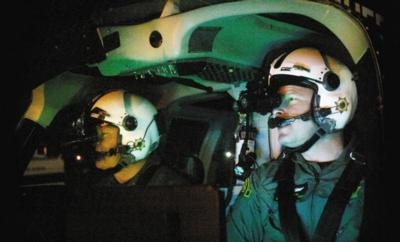
FlightSafety International now offers FAA-approved Part 142 Night Vision Goggle initial training for the Airbus Helicopters H135, Bell 212, and Bell 412EP using Level D qualified simulators. FlightSafety also introduces an NVG eLearning recurrent course.

“The ongoing expansion of our NVG training for helicopter pilots demonstrates our investment and commitment to providing the highest quality training for this critically important technology,” said Steve Gross, Senior Vice President, Sales.

The initial training is designed to provide in-depth instruction on the equipment and focus on the efficient and effective use of the goggles through scenario based and mission specific exercises. It includes eight hours of ground school and eight hours of training in an advanced Level D qualified simulator that features the company’s industry-leading VITAL 1100 visual system.

The simulators are NVG qualified by the FAA’s National Simulator Program. The qualification was received after thorough evaluation and demonstration of the simulator’s ability to accurately represent Night Vision Goggle operations.

The recurrent course provides an extensive review of NVG operational techniques during all phases of flight. Topics include Limitations and Flight Operations; Aeromedical Factors; Normal, Abnormal, and Emergency Operation; Performance and Scene Interpretation; Flight Planning; as well as Night Interpretation and Factors Affecting Interpretation. It also covers NVG regulatory and procedural guidance FAA 61.31(k) (1).

(Image provided with FlightSafety news release)

FMI: www.flightsafety.com

Advertisement

More News

Aero-FAQ: Dave Juwel's Aviation Marketing Stories -- ITBOA BNITBOB

Dave Juwel's Aviation Marketing Stories ITBOA BNITBOB ... what does that mean? It's not gibberish, it's a lengthy acronym for "In The Business Of Aviation ... But Not In The Busine>[...]

NTSB Prelim: Rutan Long-EZ

The Pilot Attempted Several Times To Restart The Engine And Diverted To Long Beach Airport/Daughtery Field On October 20, 2025, about 1603 Pacific daylight time, an experimental am>[...]

ANN's Daily Aero-Term (12.05.25): Hazardous Weather Information

Hazardous Weather Information Summary of significant meteorological information (SIGMET/WS), convective significant meteorological information (convective SIGMET/WST), urgent pilot>[...]

Aero-News: Quote of the Day (12.05.25)

"The latest development underscores the government of Malaysia’s commitment in providing closure to the families affected by this tragedy..." Source: From statements made by >[...]

Airborne-Flight Training 12.04.25: Ldg Fee Danger, Av Mental Health, PC-7 MKX

Also: IAE Acquires Diamond Trainers, Army Drones, FedEx Pilots Warning, DA62 MPP To Dresden Tech Uni The danger to the flight training industry and our future pilots is clear. Dona>[...]

blog comments powered by Disqus



Advertisement

Advertisement

Podcasts

Advertisement

© 2007 - 2025 Web Development & Design by Pauli Systems, LC

