Sun, May 23, 2021
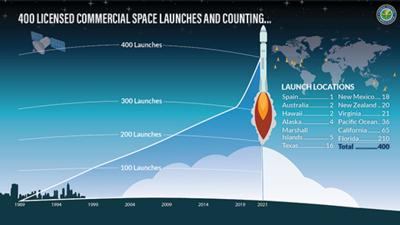
Launch Activity Has Dramatically Accelerated From Only One In 2011 To A Record 39 In 2020
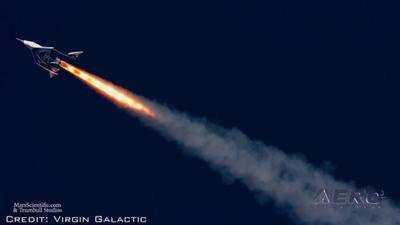
Saturday’s Virgin Galactic SpaceShipTwo flight from Spaceport America in New Mexico marks the 400th launch that the FAA has licensed. This achievement is made possible by the U.S. commercial space industry’s ingenuity and the FAA’s commitment to public safety.
FAA licensing is a critical step in protecting public safety during commercial space operations. An FAA license is required to conduct any commercial space launch or reentry, the operation of any launch or reentry site by U.S. citizens anywhere in the world, or by any individual or entity within the United States.
The FAA works with operators to make sure they are meeting the requirements to conduct launches. This includes having FAA safety inspectors monitor all phases of licensed activities. The agency also works with the industry to safely and efficiently integrate commercial space operations in the National Airspace System.
There have been no fatalities, serious injuries or significant property damage to members of the public during any FAA-licensed launch. The FAA is committed to maintaining this safety record as the pace of commercial space operations quickens.
The number of FAA-licensed commercial space launches has dramatically accelerated from only one in 2011 to a record 39 in 2020. The growth is expected to continue as the industry looks towards space tourism in the coming years.
The first licensed launch occurred in New Mexico, when a Space Services Starfire launched from White Sands Missile Range in 1989.
The subsequent launches included suborbital and orbital flights and missions that delivered payloads to the Earth’s orbit and moon as well as interplanetary space. The missions had diverse goals such as carrying supplies and crew to the International Space Station, advancing scientific and medical research, and testing space capsules and rocket systems. They also involved deploying satellites for commercial use and for supporting the national interests of the United States.
The launches occurred in seven U.S. states, four foreign countries and the international waters of the Pacific Ocean. They were launched from traditional land-based sites, ocean platforms and while airborne using carrier aircraft.
More News
Its Offerings Are Lighter, Cleaner, and Now Pushing Past 1,000nm on SAF Jet Fuel DeltaHawk’s diesel-powered aircraft lineup has seen incredible upgrades over the last few yea>[...]
The Airplane Experienced A Total Loss Of Engine Power On December 3, 2025, about 1600 central standard time, a Mooney Aircraft Corp. M20K, N57229, was substantially damaged when it>[...]
Make Sure You NEVER Miss A New Story From Aero-News Network Do you ever feel like you never see posts from a certain person or page on Facebook or Instagram? Here’s how you c>[...]
Aero Linx: European Society of Aerospace Medicine (ESAM) As a pan-European, independent forum, it works to promote the safety and health of all persons involved in aviation and spa>[...]
“We are excited to see Wisk achieve this milestone, and I’m so proud of the team that made it possible. The team at Wisk has built advanced technologies across flight c>[...]



 Aero-TV: DeltaHawks Diesel Power Steps Into the Spotlight


 See All