

Airline Pilots Urge Airbus to Rethink Flight Crew Reductions | Aero-News Network
Aero-News Network
RSS icon RSS feed
podcast icon MP3 podcast
Subscribe Aero-News e-mail Newsletter Subscribe

Airborne Unlimited -- Most Recent Daily Episodes

Episode Date

Airborne-Monday

Airborne-Tuesday

Airborne-Wednesday Airborne-Thursday

Airborne-Friday

Airborne On YouTube

Airborne-Unlimited-12.01.25

AirborneNextGen-
11.18.25

Airborne-Unlimited-11.19.25

Airborne-AffordableFlyers-11.20.25

AirborneUnlimited-11.21.25

LIVE MOSAIC Town Hall (Archived): www.airborne-live.net

Thu, Aug 08, 2024

Airline Pilots Urge Airbus to Rethink Flight Crew Reductions

Fallible Technology At Heart Of The Issue

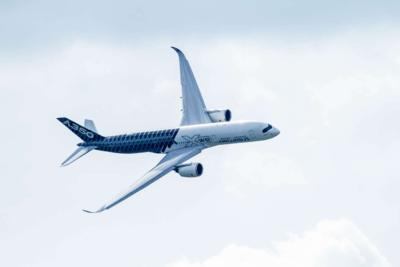
Airline pilots from around the world are very concerned about what they consider to be a potential threat to the safety and security of passengers during commercial air travel: reducing the number of pilots on the flight deck.

Given that nearly all airliners are flown by a Captain and a First Officer, that means the safety of airline passengers would be entrusted to Single-Pilot operations. No pilot thinks this is a good idea, as evidenced by the letter sent by the Air Line Pilots Association, International (ALPA) to Guillaume Faury, CEO of Airbus, who has been a proponent of increasing automation and reducing flight crews in airliners.

In the letter, ALPA President Jason Ambrosi outlined the reasons he urges Faury to reconsider his strategy regarding Extended Minimum Crew Operations (eMCO), that is, single-pilot operations.

The three main points against eMCO are, first, is the fact that technology in general and aircraft in particular, specifically automation and autonomous decision-making, are not infallible. 

Witness the recent CrowdStrike outage that wreaked havoc across the airline industry causing hundreds of flights cancelled and thousands of passengers and crew members stranded. The lesson to be gained is to think of technology as assistance to humans, not as replacement.

Second, humans are not infallible either. Should a flight crew member become incapacitated or ill during a single-pilot operation, the risk to everyone else on board becomes exponentially higher.

Third, many aircraft systems incorporate redundancy so if one system fails, the other can take over that function. A two-pilot crew is similar in that they share tasks and deal with emergencies much better as a team. With only one pilot in the cockpit, he or she is a potential single point of failure jeopardizing the flight and all on board.

FMI: alpa.org

Advertisement

More News

ANN's Daily Aero-Term (11.29.25): Waypoint

Waypoint A predetermined geographical position used for route/instrument approach definition, progress reports, published VFR routes, visual reporting points or points for transiti>[...]

ANN's Daily Aero-Linx (11.29.25)

Aero Linx: Sentimental Journey to Cub Haven Sentimental Journey Flyin began in 1986 with a group of dedicated volunteers working to provide a sentimental return to Lock Haven, the >[...]

NTSB Prelim: Jabiru USA Sport Aircraft LLC J230-SP

The Pilot Would Often Fly Over Their House At A Low Altitude And That Family Members Would Go Outside To Wave On November 14, 2025, at 1708 eastern standard time, a Jabiru USA Spor>[...]

Classic Aero-TV: Crafting The Future of eVTOL Infrastructure

From 2024 (YouTube Edition): Volatus Infrastructure Paves The Way The name “Volatus” seems to be everywhere these days, popping up in a series of partnerships and proje>[...]

Klyde Morris (11.28.25)

Fortnite Conquers All, Klyde FMI: www.klydemorris.com>[...]

blog comments powered by Disqus



Advertisement

Advertisement

Podcasts

Advertisement

© 2007 - 2025 Web Development & Design by Pauli Systems, LC

