
NASA Takes Steps To Insure Bird-Free Shuttle Launch | Aero-News Network
Aero-News Network
RSS icon RSS feed
podcast icon MP3 podcast
Subscribe Aero-News e-mail Newsletter Subscribe

Airborne Unlimited -- Most Recent Daily Episodes

Episode Date

Airborne-Monday

Airborne-Tuesday

Airborne-Wednesday Airborne-Thursday

Airborne-Friday

Airborne On YouTube

Airborne-Unlimited-12.22.25

AirborneNextGen-
12.23.25

Airborne-Unlimited-12.10.25

Airborne-FltTraining-12.18.25

AirborneUnlimited-12.19.25

AFE 2025 LIVE MOSAIC Town Hall (Archived): www.airborne-live.net

Sat, Jun 10, 2006

NASA Takes Steps To Insure Bird-Free Shuttle Launch

Sounds Of Gunshots, Traps Aim To Keep Vultures Away

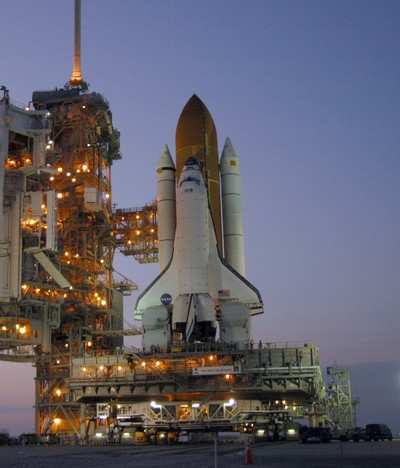
When it comes time for the space shuttle Discovery to lift off next month, NASA wants to make sure the ONLY bird in the sky is the one that's rocket-powered.

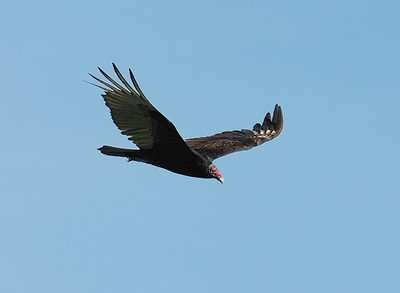
To that end, NASA plans to deploy such measures as taped battlefield sounds and baited traps to keep vultures away from the Kennedy Space Center. NASA fears the plus-sized birds could cause considerable damage to the orbiter if one should hit the orbiter.

In fact, a vulture did hit the shuttle last July, during the launch of Discovery's first return to flight mission. Fortunately, that collision resulted in no damage to the orbiter... but NASA says another such run-in could catastrophically damage the shuttle, and cause a repeat of the 2003 loss of the shuttle Columbia during reentry.

Consider this: the piece of foam insulation that struck the Columbia's wing on liftoff -- damaging its heat-shield -- only weighed 1.7 pounds. A full-grown vulture can weigh FIVE pounds.

That's why NASA is planning ahead -- already removing one source of food that attracts the vultures, by scraping up roadkill on all roads near the space center.

Combined with audio of gunfire and explosions, as well as baited live vulture traps, and even radar set to detect vulture-sized objects in the sky, NASA believes it will be able to launch its bird in near-complete safety... and without an avian audience.

FMI: www.nasa.gov

Advertisement

More News

Aero-TV: DeltaHawk’s Diesel Power Steps Into the Spotlight

Its Offerings Are Lighter, Cleaner, and Now Pushing Past 1,000nm on SAF Jet Fuel DeltaHawk’s diesel-powered aircraft lineup has seen incredible upgrades over the last few yea>[...]

NTSB Prelim: Mooney Aircraft Corp. M20K

The Airplane Experienced A Total Loss Of Engine Power On December 3, 2025, about 1600 central standard time, a Mooney Aircraft Corp. M20K, N57229, was substantially damaged when it>[...]

ANN FAQ: Turn On Post Notifications

Make Sure You NEVER Miss A New Story From Aero-News Network Do you ever feel like you never see posts from a certain person or page on Facebook or Instagram? Here’s how you c>[...]

ANN's Daily Aero-Linx (12.20.25)

Aero Linx: European Society of Aerospace Medicine (ESAM) As a pan-European, independent forum, it works to promote the safety and health of all persons involved in aviation and spa>[...]

Aero-News: Quote of the Day (12.20.25)

“We are excited to see Wisk achieve this milestone, and I’m so proud of the team that made it possible. The team at Wisk has built advanced technologies across flight c>[...]

blog comments powered by Disqus



Advertisement

Advertisement

Podcasts

Advertisement

© 2007 - 2025 Web Development & Design by Pauli Systems, LC

