
Shuttle Foam Problems Increased With Switch To Environmentally Friendly Foam | Aero-News Network
Aero-News Network
RSS icon RSS feed
podcast icon MP3 podcast
Subscribe Aero-News e-mail Newsletter Subscribe

Airborne Unlimited -- Most Recent Daily Episodes

Episode Date

Airborne-Monday

Airborne-Tuesday

Airborne-Wednesday Airborne-Thursday

Airborne-Friday

Airborne On YouTube

Airborne-SpecialEpisode-12.15.25

AirborneNextGen-
12.16.25

Airborne-Unlimited-12.10.25

Airborne-AffordableFlyers-12.11.25

AirborneUnlimited-12.12.25

AFE 2025 LIVE MOSAIC Town Hall (Archived): www.airborne-live.net

Tue, Aug 02, 2005

Shuttle Foam Problems Increased With Switch To Environmentally Friendly Foam

Discovery Thermal Protection System Damage Appears Minimal

NASA switched to a Freon-free insulating foam for the external fuel tanks starting with the STS-87 flight of the Shuttle Columbia in 1997. This flight received dramatically more damage then previous flights. Subsequent shuttle flights using the new foam continued to result in up to 11 times more damage then previous flights with the original foam.

The switch to the environmentally friendly foam was made as part of a NASA effort to reduce the environmental impact of space flights. EPA regulations banning CFC's including Freon were put in place due to a suspected link to high altitude Ozone layer depletion.

Examination of the extensive inspection photographs of Discovery has found only small damage to the thermal protection system. NASA has admitted that it was simply luck that one piece of foam almost as large as the one blamed for the destruction of Columbia missed the leading edge of Discoveries wing, and has grounded the remainder of the shuttle fleet until a solution is found. If that piece of foam would have fallen off just 30 seconds sooner in the flight it may have hit the shuttle with similar force as the one that doomed Columbia.

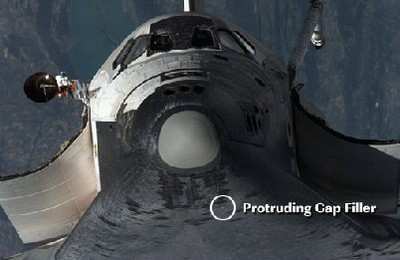
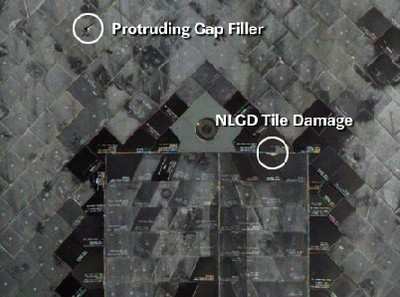
A detailed search through the pictures and video taken during Discovery's launch has found a much smaller piece of foam that apparently deflecting off the wing. Other items found during the inspection include a piece of damaged tile on the critical nose wheel door and a piece of gap filler, which insulates between the tiles, which is protruding located slightly farther back on the belly of the shuttle. These areas are being examined in great detail.

FMI: www.nasa.gov

Advertisement

More News

Aero-TV: DeltaHawk’s Diesel Power Steps Into the Spotlight

Its Offerings Are Lighter, Cleaner, and Now Pushing Past 1,000nm on SAF Jet Fuel DeltaHawk’s diesel-powered aircraft lineup has seen incredible upgrades over the last few yea>[...]

NTSB Prelim: Mooney Aircraft Corp. M20K

The Airplane Experienced A Total Loss Of Engine Power On December 3, 2025, about 1600 central standard time, a Mooney Aircraft Corp. M20K, N57229, was substantially damaged when it>[...]

ANN FAQ: Turn On Post Notifications

Make Sure You NEVER Miss A New Story From Aero-News Network Do you ever feel like you never see posts from a certain person or page on Facebook or Instagram? Here’s how you c>[...]

ANN's Daily Aero-Linx (12.20.25)

Aero Linx: European Society of Aerospace Medicine (ESAM) As a pan-European, independent forum, it works to promote the safety and health of all persons involved in aviation and spa>[...]

Aero-News: Quote of the Day (12.20.25)

“We are excited to see Wisk achieve this milestone, and I’m so proud of the team that made it possible. The team at Wisk has built advanced technologies across flight c>[...]

blog comments powered by Disqus



Advertisement

Advertisement

Podcasts

Advertisement

© 2007 - 2025 Web Development & Design by Pauli Systems, LC

