
NASA Readies New Type Of Earth-Observing Satellite For Launch | Aero-News Network
Aero-News Network
RSS icon RSS feed
podcast icon MP3 podcast
Subscribe Aero-News e-mail Newsletter Subscribe

Airborne Unlimited -- Most Recent Daily Episodes

Episode Date

Airborne-Monday

Airborne-Tuesday

Airborne-Wednesday Airborne-Thursday

Airborne-Friday

Airborne On YouTube

Airborne-Unlimited-12.08.25

AirborneNextGen-
12.09.25

Airborne-Unlimited-12.10.25

Airborne-AffordableFlyers-12.11.25

AirborneUnlimited-12.12.25

AFE 2025 LIVE MOSAIC Town Hall (Archived): www.airborne-live.net

Fri, Oct 14, 2011

NASA Readies New Type Of Earth-Observing Satellite For Launch

Will Collect Data To Improve Accuracy Of Weather Forecasts

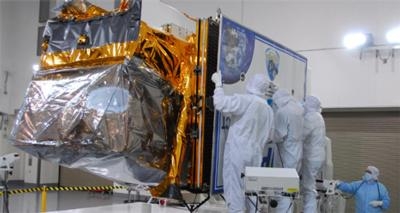
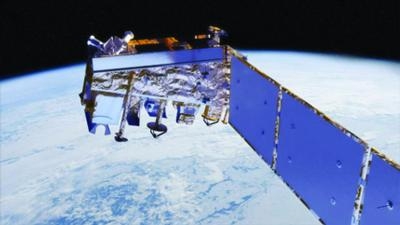
NASA is planning an Oct. 27 launch of the first Earth-observing satellite to measure both key weather variables and global climate changes. The National Polar-orbiting Operational Environmental Satellite System Preparatory Project (NPP) is the first mission designed to collect critical data to improve weather forecasts in the short-term and increase understanding of long-term climate change. NPP continues observations of Earth from space that NASA has pioneered for more than 40 years.

NASA Image

NPP's five science instruments, including four new state-of-the-art sensors, will provide scientists with data to extend more than 30 key long-term datasets. These records, which range from the ozone layer and land cover to atmospheric temperatures and ice cover, are critical for global change science.

"NPP's observations of a wide range of interconnected Earth properties and processes will give us the big picture of how our planet changes," said Jim Gleason, NPP project scientist at NASA's Goddard Space Flight Center in Greenbelt, Md. "That will help us improve our computer models that predict future environmental conditions. Better predictions will let us make better decisions, whether it is as simple as taking an umbrella to work today or as complex as responding to a changing climate."

NPP serves as a bridge between NASA's Earth Observing System of satellites and the planned Joint Polar Satellite System (JPSS), which will collect climate and weather data. JPSS will be developed by NASA for the National Oceanic and Atmospheric Administration (NOAA). NOAA meteorologists will incorporate NPP data into their weather prediction models to produce forecasts and warnings that will help emergency responders anticipate, monitor and react to many types of natural disasters. "The timing of the NPP launch could hardly be more appropriate," said Louis W. Uccellini, director of NOAA's National Centers for Environmental Prediction in Camp Springs, Md. "With the many billion dollar weather disasters in 2011, NPP data is critical for accurate weather forecasts into the future."

NASA Image

A Delta II rocket will carry NPP into an orbit 512 miles above Earth's surface. Roughly the size of a mini-van, the spacecraft will orbit Earth's poles about 14 times a day. It will transmit data once each orbit to a ground station in Svalbard, Norway, and to direct broadcast receivers around the world.

NPP is set to launch from Space Launch Complex 2 at Vandenberg Air Force Base in California on Oct. 27. The launch window extends from 0548 to 0557 EDT. The launch recently was delayed two days due to the repair of the Delta II's hydraulic system. The NPP spacecraft is scheduled to be transported to the launch pad for attachment to the Delta II on Oct. 12. NPP's Delta II launch vehicle also will carry several auxiliary payloads into orbit, which together comprise NASA's third Educational Launch of Nanosatellite, or ELaNa, mission. This mission will put five small research payloads, or CubeSats, into orbit: two for the University of Michigan; and one each for Auburn University, Montana State University and Utah State University.

FMI: www.nasa.gov/npp

Advertisement

More News

Aero-News: Quote of the Day (12.11.25)

"The owners envisioned something modern and distinctive, yet deeply meaningful. We collaborated closely to refine the flag design so it complemented the aircraft’s contours w>[...]

ANN's Daily Aero-Term (12.11.25): Nonradar Arrival

Nonradar Arrival An aircraft arriving at an airport without radar service or at an airport served by a radar facility and radar contact has not been established or has been termina>[...]

Classic Aero-TV: David Uhl and the Lofty Art of Aircraft Portraiture

From 2022 (YouTube Edition): Still Life with Verve David Uhl was born into a family of engineers and artists—a backdrop conducive to his gleaning a keen appreciation for the >[...]

Airborne-NextGen 12.09.25: Amazon Crash, China Rocket Accident, UAV Black Hawk

Also: Electra Goes Military, Miami Air Taxi, Hypersonics Lab, MagniX HeliStrom Amazon’s Prime Air drones are back in the spotlight after one of its newest MK30 delivery drone>[...]

Airborne 12.05.25: Thunderbird Ejects, Lost Air india 737, Dynon Update

Also: Trailblazing Aviator Betty Stewart, Wind Farm Scrutiny, Chatham Ban Overturned, Airbus Shares Dive A Thunderbird pilot, ID'ed alternately as Thunderbird 5 or Thunderbird 6, (>[...]

blog comments powered by Disqus



Advertisement

Advertisement

Podcasts

Advertisement

© 2007 - 2025 Web Development & Design by Pauli Systems, LC

