Would Allow Flights At Night And Over People Without A Waiver
The FAA has issued a Notice of Proposed Rulemaking (NPRM) that would allow operations of small unmanned aircraft over people in certain conditions and operations of small UAS at night without obtaining a waiver. It would also require remote pilots in command to present their remote pilot in command certificate as well as identification to certain Federal, State, or local officials, upon request, and proposes to amend the knowledge testing requirements in the rules that apply to small UAS operations to require training every 24 calendar months. This proposal would be the next phase in integrating small UAS using a risk-based approach. These amendments would allow expanded small UAS operations and reduce the knowledge testing burden on remote pilot in command certificate holders.
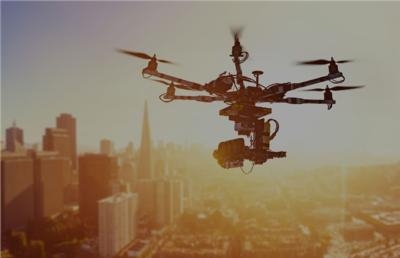
This proposal is the next step in the FAA's incremental approach to integrating UAS into the national airspace system (NAS), based on demands for increased operational flexibility and the experience FAA has gained since part 107 was first published.[6] Specifically, this proposal would expand the activities permitted under part 107 to allow operations over people and at night under certain conditions. As such, it builds on the framework established when the FAA first published part 107. For example, this proposal applies to the same universe of UAS operations identified in the 2016 rule. The FAA will continue to build on this framework as it develops future proposals to allow increasingly more complex operations in the NAS.
This proposal also builds on the performance-based regulatory philosophy established in the 2016 part 107 rule. In that rule, the FAA recognized that the possibilities for innovation in unmanned aircraft technology are virtually boundless and that the industry can move in directions no one can predict. Today, there are even more applications and opportunities for small UAS that either did not exist or were only in their nascent stages in 2016. The FAA's challenge in developing this proposal, therefore, is to balance the need to mitigate the risk small unmanned aircraft pose to other aircraft and to people and property on the ground without inhibiting innovation.
One aspect of the FAA's challenge is that technology moves at the speed of innovation while the administrative rulemaking process, by design, does not. To address this challenge, this proposal is technologically neutral, with the understanding that technology and applications will evolve in the time between the publication of this proposal and the final rule, and beyond. As a result, this proposal incorporates performance-based requirements to achieve the agency's safety objectives while simultaneously encouraging the development of solutions in this dynamic environment.
Taking into account this challenge and these competing considerations, the FAA proposes to relax the prohibition on operations over people and at night under certain circumstances. While this step may have a significant effect on stakeholders, it represents a small change to the regulatory structure for small UAS. The FAA expects all operators to continue to comply with the existing provisions of part 107. The consequences of noncompliance that currently apply to part 107 remain in effect and would be extended to any new provisions implemented following this proposal.
The proposal is open for comments through April 15.
(Source: FAA. Image from file)



 Aero-News: Quote of the Day (12.11.25)


 See All