
NTSB Urges Better Maintenance, Pilot Training For Parachute Jump Operators | Aero-News Network
Aero-News Network
RSS icon RSS feed
podcast icon MP3 podcast
Subscribe Aero-News e-mail Newsletter Subscribe

Airborne Unlimited -- Most Recent Daily Episodes

Episode Date

Airborne-Monday

Airborne-Tuesday

Airborne-Wednesday Airborne-Thursday

Airborne-Friday

Airborne On YouTube

Airborne-Unlimited-12.08.25

AirborneNextGen-
12.09.25

Airborne-Unlimited-12.10.25

Airborne-AffordableFlyers-12.11.25

AirborneUnlimited-12.12.25

AFE 2025 LIVE MOSAIC Town Hall (Archived): www.airborne-live.net

Tue, Sep 16, 2008

NTSB Urges Better Maintenance, Pilot Training For Parachute Jump Operators

Issues Probable Cause Report In July 2006 Twin Otter Downing

The National Transportation Safety Board released Tuesday its special investigation report identifying several recurring safety issues with parachute jump operations, and recommending improvements in aircraft maintenance and pilot training.

Parachute jump operations represent a segment of US general aviation that transports about 3 million parachutists annually. Although the risks associated with parachuting are generally perceived to involve the acts of jumping from the aircraft, deploying the parachute, and landing, the NTSB notes that since 1980, 32 fatal accidents claimed the lives of 172 people in airplane accidents unassociated with these parachutist-controlled risks.

"As this activity increases in popularity, we have to ensure that safe operations are adhered to by all operators," said Acting Chairman Mark V. Rosenker. "Our recommendations in the areas of maintenance and training will move this industry forward in preventing these types of accidents."

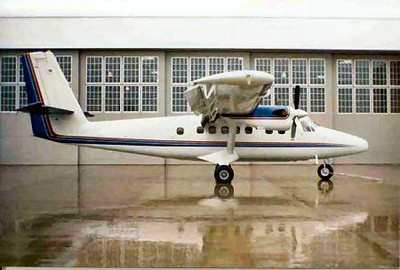
The Special Investigation Report was prompted by the investigation of the July 29, 2006 downing of a deHavilland DHC-6-100 Twin Otter in Sullivan, MO. The aircraft, operated by Skydive Quantum Leap as a parachute operations flight, crashed after takeoff from Sullivan Regional Airport.

As ANN reported, the pilot and five parachutists were killed and two other parachutists were seriously injured. The Board determined Tuesday the probable cause of the crash was the pilot's failure to maintain airspeed following loss of power in the right engine.

The Board's study of parachute jump operations issued recommendations to the Federal Aviation Administration (FAA) and the United States Parachute Association (USPA) to address a pattern of safety deficiencies in several areas:

  • Inadequate aircraft maintenance and inspections
  • Lack of pilot initial and recurrent training programs, and examination standards that address operation-specific and aircraft-specific considerations
  • Inadequate FAA oversight and direct surveillance.

The Board concluded in the Sullivan investigation that more parachutists may have survived, and injuries may have been reduced, if more effective restraints had been used.

"This clearly emphasizes the importance of implementing our recommendations designed to increase survivability when an accident does occur," said Rosenker.

As a result of the Sullivan investigation, the Safety Board made recommendations to the FAA and USPA regarding dual-point restraint systems for parachutists that reflect the various aircraft and seating configurations used in parachute operations. A synopsis of the Board's complete findings, as well as the Probable Cause report on the Sullivan accident, is available on the NTSB Web site.

FMI: www.ntsb.gov

Advertisement

More News

ANN's Daily Aero-Term (12.13.25): Light Gun

Light Gun A handheld directional light signaling device which emits a brilliant narrow beam of white, green, or red light as selected by the tower controller. The color and type of>[...]

Aero-News: Quote of the Day (12.13.25)

“We have performed extensive ground testing by comparing warm up times, full power tethered pulls, and overall temperatures in 100 degree environments against other aircraft >[...]

NTSB Final Report: Gippsland GA-8

While Taxiing To Parking The Right Landing Gear Leg Collapsed, Resulting In Substantial Damage Analysis: The pilot made a normal approach with full flaps and landed on the runway. >[...]

Classic Aero-TV: Historically Unique -- Marlin Horst's Exquisite Fairchild 71

From 2014 (YouTube Edition): Exotic Rebuild Reveals Aerial Work Of Art During EAA AirVenture 2014, ANN's Michael Maya Charles took the time to get a history lesson about a great ai>[...]

Airborne 12.12.25: Global 8000, Korea Pilot Honors, AV-30 Update

Also: Project Talon, McFarlane Acquisition, Sky-Tec Service, JPL Earth Helo Tests Bombardier has earned a round of applause from the business aviation community, celebrating the fo>[...]

blog comments powered by Disqus



Advertisement

Advertisement

Podcasts

Advertisement

© 2007 - 2025 Web Development & Design by Pauli Systems, LC

