
U.K. MoD Signs Five-Year Support Contract With Leonardo | Aero-News Network
Aero-News Network
RSS icon RSS feed
podcast icon MP3 podcast
Subscribe Aero-News e-mail Newsletter Subscribe

Airborne Unlimited -- Most Recent Daily Episodes

Episode Date

Airborne-Monday

Airborne-Tuesday

Airborne-Wednesday Airborne-Thursday

Airborne-Friday

Airborne On YouTube

Airborne-Unlimited-12.08.25

AirborneNextGen-
12.09.25

Airborne-Unlimited-12.10.25

Airborne-AffordableFlyers-12.11.25

AirborneUnlimited-12.12.25

AFE 2025 LIVE MOSAIC Town Hall (Archived): www.airborne-live.net

Mon, Jul 09, 2018

U.K. MoD Signs Five-Year Support Contract With Leonardo

Covers Pre-Flight Threat Simulation Equipment For Multiple U.K. Air Platforms

Leonardo has been awarded a post-design support contract by the U.K. Ministry of Defense which will see the Company provide in-service support for its pre-flight threat simulation equipment, currently being used on the Typhoon, Tornado, Merlin, Wildcat, Chinook and C130J platforms. The contract builds upon the previous 10 years of support delivered by Leonardo and will run over a five year period from 2018 until 2022.

Leonardo’s threat simulation equipment has been designed and developed in the U.K. in partnership with the MOD, using state-of-the-art Radio-Frequency (RF) technology to provide a wide range of stimulation and test capabilities.

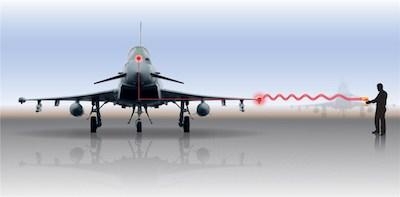
The equipment uses special RF-emitting ‘hoods’ and handheld devices to target the particular platform’s sensors and simulates threats using real radar energy whilst the aircraft is still grounded. By performing this preliminary check, the user gains increased confidence that the platform’s RF defensive systems are operationally effective before embarking on a mission.

The majority of Defensive Aids Suites (DAS) on air platforms come with ready installed ‘built-in-test-equipment’ (BITE), which signals to the pilot that the equipment is working as designed. However, throughout the life of an aircraft, and with each mission it executes, undetected problems can emerge as the aircraft receives ongoing maintenance. For instance, in some cases the RF antenna degrades. These issues may not be identified by the BITE, meaning the installation is not operationally effective. As a result of this, limited or incorrect information could be provided to the pilot by the system, endangering the crew. Leonardo’s equipment closes this gap, providing improved ‘capability assurance’ throughout a platform’s operational life.

(Image provided with Leonardo Company news release)

FMI: www.leonardocompany.com

Advertisement

More News

Aero-News: Quote of the Day (12.09.25)

“We respectfully call on the City of Mesa to: 1. Withdraw the landing fee proposal immediately 2. Engage with the aviation community before making decisions that impact safet>[...]

ANN's Daily Aero-Term (12.09.25): High Speed Taxiway

High Speed Taxiway A long radius taxiway designed and provided with lighting or marking to define the path of aircraft, traveling at high speed (up to 60 knots), from the runway ce>[...]

ANN's Daily Aero-Linx (12.09.25)

Aero Linx: International Federation of Airworthiness (IFA) IFA uniquely combines together all those with responsibility for policies, principles and practices concerned with the co>[...]

NTSB Final Report: Diamond Aircraft Ind Inc DA20C1 (A1); Robinson Helicopter R44

Controller’s Expectation That VW02 Would Have Departed Sooner Led To An Inadequate Scan And Loss Of Situational Awareness Analysis: A Robinson R-44 helicopter N744AF, VW02 (V>[...]

ANN FAQ: Q&A 101

A Few Questions AND Answers To Help You Get MORE Out of ANN! 1) I forgot my password. How do I find it? 1) Easy... click here and give us your e-mail address--we'll send it to you >[...]

blog comments powered by Disqus



Advertisement

Advertisement

Podcasts

Advertisement

© 2007 - 2025 Web Development & Design by Pauli Systems, LC

