
FAA Streamlines COAs For UAS Test Sites | Aero-News Network
Aero-News Network
RSS icon RSS feed
podcast icon MP3 podcast
Subscribe Aero-News e-mail Newsletter Subscribe

Airborne Unlimited -- Most Recent Daily Episodes

Episode Date

Airborne-Monday

Airborne-Tuesday

Airborne-Wednesday Airborne-Thursday

Airborne-Friday

Airborne On YouTube

Airborne-SpecialEpisode-12.15.25

AirborneNextGen-
12.16.25

Airborne-Unlimited-12.10.25

Airborne-AffordableFlyers-12.11.25

AirborneUnlimited-12.12.25

AFE 2025 LIVE MOSAIC Town Hall (Archived): www.airborne-live.net

Sat, May 23, 2015

FAA Streamlines COAs For UAS Test Sites

Recreational And Sport Pilot Certificate Holders Are Now Able To Conduct Flights

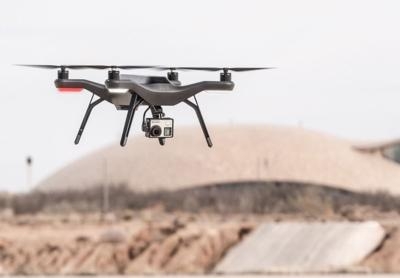
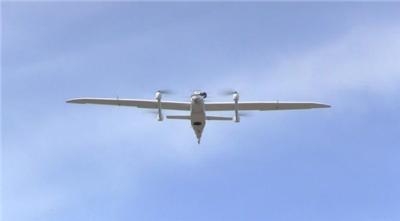
The FAA has made it simpler for the six unmanned aircraft systems (UAS) test sites to conduct research by giving them “blanket” authorizations to fly public aircraft operations throughout the National Airspace System at or below 200 feet.

The FAA expects this improved access for the test sites will provide more opportunities for research that may help the agency integrate UAS into the nation’s airspace more quickly and easily.

The new Certificates of Waiver or Authorization (COAs) allow small UAS (under 55 lbs.) operated by the test sites to fly up to 200 feet above ground level anywhere in the country except restricted airspace and areas close to airports and heliports. Operators must fly during daytime Visual Flight Rules conditions and within visual line of sight of the pilot. The new authorizations also let the test sites fly various types of UAS under a single COA, making it easier for them to conduct research missions. Previously, the FAA required authorization for each type of UAS the operators wanted to fly.

The FAA now permits people who hold a recreational or sport pilot certificate to conduct test site operations under the blanket COA. Previously, the agency required operators to hold at least a private pilot certificate. A third class medical certificate also is no longer required. Now an operator only needs a valid driver’s license to satisfy the medical requirement.

These expanded operational parameters for the test sites are similar to those the FAA implemented recently for civil UAS operations authorized under a Section 333 exemption.

The six UAS test sites are the first public operators to receive this type of “blanket” airspace access across the United States, including Alaska and Hawaii. The sites may still fly outside the “blanket” COA parameters if they receive or retain separate COAs specific to the airspace requested for those operations.

(Images from file)

FMI: www.faa.gov/uas

Advertisement

More News

Aero-TV: DeltaHawk’s Diesel Power Steps Into the Spotlight

Its Offerings Are Lighter, Cleaner, and Now Pushing Past 1,000nm on SAF Jet Fuel DeltaHawk’s diesel-powered aircraft lineup has seen incredible upgrades over the last few yea>[...]

NTSB Prelim: Mooney Aircraft Corp. M20K

The Airplane Experienced A Total Loss Of Engine Power On December 3, 2025, about 1600 central standard time, a Mooney Aircraft Corp. M20K, N57229, was substantially damaged when it>[...]

ANN FAQ: Turn On Post Notifications

Make Sure You NEVER Miss A New Story From Aero-News Network Do you ever feel like you never see posts from a certain person or page on Facebook or Instagram? Here’s how you c>[...]

ANN's Daily Aero-Linx (12.20.25)

Aero Linx: European Society of Aerospace Medicine (ESAM) As a pan-European, independent forum, it works to promote the safety and health of all persons involved in aviation and spa>[...]

Aero-News: Quote of the Day (12.20.25)

“We are excited to see Wisk achieve this milestone, and I’m so proud of the team that made it possible. The team at Wisk has built advanced technologies across flight c>[...]

blog comments powered by Disqus



Advertisement

Advertisement

Podcasts

Advertisement

© 2007 - 2025 Web Development & Design by Pauli Systems, LC

