

Littlest Boeing Makes Autonomous Flight | Aero-News Network
Aero-News Network
RSS icon RSS feed
podcast icon MP3 podcast
Subscribe Aero-News e-mail Newsletter Subscribe

Airborne Unlimited -- Most Recent Daily Episodes

Episode Date

Airborne-Monday

Airborne-Tuesday

Airborne-Wednesday Airborne-Thursday

Airborne-Friday

Airborne On YouTube

Airborne-Unlimited-12.08.25

AirborneNextGen-
12.09.25

Airborne-Unlimited-12.10.25

Airborne-AffordableFlyers-12.11.25

AirborneUnlimited-12.12.25

AFE 2025 LIVE MOSAIC Town Hall (Archived): www.airborne-live.net

Fri, Jun 21, 2002

Littlest Boeing Makes Autonomous Flight

No; It's Not the 717 -- It's the ScanEagle UAV

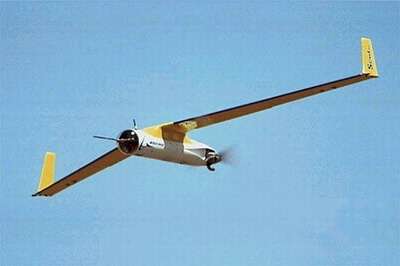
ScanEagle, a Boeing long-endurance unmanned aerial vehicle, successfully made its first autonomous flight Wednesday at the company's Boardman test facility in eastern Oregon. The UAV, built by The Insitu Group, took off via a pneumatic catapult and flew a pre-programmed course at a maximum altitude of 1,500 feet.

During the 45-minute flight, ScanEagle completed a number of test points using the Global Positioning System. The test team also demonstrated the ability to make real-time updates to the flight plan from the ground station. The UAV was retrieved using the patented SkyHook technique, in which the ScanEagle catches a rope hanging from a 30-foot-high pole.

"ScanEagle's milestone autonomous flight is a great example of the breadth of projects of our Unmanned Systems  organization," said Charlie Guthrie, Boeing Unmanned Systems director of rapid prototyping and advanced concepts. "We are melding Insitu's expertise and unique capabilities with the best of Boeing to provide an autonomous, low-cost, long-endurance UAV for a wide range of potential customers.

"Boeing has the proven expertise in all the areas essential to success in the unmanned market, and we foresee both commercial and military applications for this type of small, low-cost, long-endurance platform."

The four-foot long vehicle, which has a 10-foot wingspan and can fly up to 68 knots, was built using systems automation, integration, communications and payload technologies applicable to a variety of Boeing unmanned systems.

In February 2002, Boeing signed a 15-month agreement with Insitu to develop the ScanEagle UAV ("New UAV From Boeing, Insitu").

ScanEagle is based on Insitu's Seascan aircraft, a variant of which made the first UAV transatlantic flight, a 2,000-mile trip from Newfoundland to Scotland that used only 1.5 gallons of gasoline.

FMI: www.boeing.com

Advertisement

More News

ANN's Daily Aero-Term (12.13.25): Light Gun

Light Gun A handheld directional light signaling device which emits a brilliant narrow beam of white, green, or red light as selected by the tower controller. The color and type of>[...]

Aero-News: Quote of the Day (12.13.25)

“We have performed extensive ground testing by comparing warm up times, full power tethered pulls, and overall temperatures in 100 degree environments against other aircraft >[...]

NTSB Final Report: Gippsland GA-8

While Taxiing To Parking The Right Landing Gear Leg Collapsed, Resulting In Substantial Damage Analysis: The pilot made a normal approach with full flaps and landed on the runway. >[...]

Classic Aero-TV: Historically Unique -- Marlin Horst's Exquisite Fairchild 71

From 2014 (YouTube Edition): Exotic Rebuild Reveals Aerial Work Of Art During EAA AirVenture 2014, ANN's Michael Maya Charles took the time to get a history lesson about a great ai>[...]

Airborne 12.12.25: Global 8000, Korea Pilot Honors, AV-30 Update

Also: Project Talon, McFarlane Acquisition, Sky-Tec Service, JPL Earth Helo Tests Bombardier has earned a round of applause from the business aviation community, celebrating the fo>[...]

blog comments powered by Disqus



Advertisement

Advertisement

Podcasts

Advertisement

© 2007 - 2025 Web Development & Design by Pauli Systems, LC

