Fri, Aug 23, 2013
Redesign For Sudden Autopilot Disconnection Needed, Say Flight Safety Experts
Flight safety experts associated with the Human Factors and Ergonomics Society studying recent high-profile aviation accidents found sudden autopilot disconnection to be a design flaw that creates unnecessary emergencies by surprising pilots during critical, high-workload episodes.
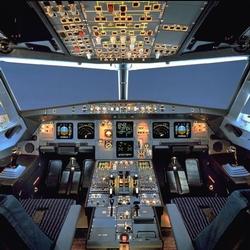
“The sudden disengagement of autopilot is analogous to a pilot suddenly throwing up his or her hands and blurting to the copilot, ‘Your Plane!’” said Eric E. Geiselman, lead author of a recently published two-article Ergonomics in Design series, “Flight Deck Automation: Invaluable Collaborator or Insidious Enabler” (July issue) and “A Call for Context-Aware Logic to Improve Safety”.
Eric E. Geiselman, along with co-authors Christopher M. Johnson, David R. Buck, and Timothy Patrick, have combined expertise as pilots, crew resource management instructors, and human factors researchers. They studied the 2009 Colgan Air crash in Buffalo, New York, and the 2009 Air France crash off the coast of Brazil with a focus on how humans and machines can best communicate on the flight deck.
The authors recommend that autopilot systems transfer controls following the same protocols crew members use – with acknowledgement by the receiving pilot that he or she has assumed control. FAA regulations require a visual and auditory warning to occur following autopilot shutoff, but Geiselman and his co-authors emphasize that such warning should occur before – not after - autopilot is disengaged.
The authors report on many other design-level safety issues in these articles and offer prototypes featuring solutions that can be affordably implemented with available technology. They believe better design of automation technology on planes can prevent future accidents and that more pilot training shouldn’t be the only solution pursued by the industry.
The Human Factors and Ergonomics Society is a nonprofit individual-member, multidisciplinary scientific association for human factors/ergonomics professionals, with more than 4,600 members globally.
More News
Its Offerings Are Lighter, Cleaner, and Now Pushing Past 1,000nm on SAF Jet Fuel DeltaHawk’s diesel-powered aircraft lineup has seen incredible upgrades over the last few yea>[...]
The Airplane Experienced A Total Loss Of Engine Power On December 3, 2025, about 1600 central standard time, a Mooney Aircraft Corp. M20K, N57229, was substantially damaged when it>[...]
Make Sure You NEVER Miss A New Story From Aero-News Network Do you ever feel like you never see posts from a certain person or page on Facebook or Instagram? Here’s how you c>[...]
Aero Linx: European Society of Aerospace Medicine (ESAM) As a pan-European, independent forum, it works to promote the safety and health of all persons involved in aviation and spa>[...]
“We are excited to see Wisk achieve this milestone, and I’m so proud of the team that made it possible. The team at Wisk has built advanced technologies across flight c>[...]



 Aero-TV: DeltaHawks Diesel Power Steps Into the Spotlight


 See All