Tue, Feb 22, 2022
EVTOL Manufacturer Suffers Setback in Certification Process, Can it Rebound?
Joby Aviation's flight test accident made waves after breaking the company's stride over recent months, marking the first real unscheduled problem for the eVTOL manufacturer.
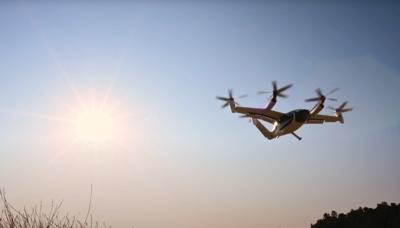
The prototype in question has been said to be used for high-speed stability testing, a conjecture supported by flight tracking data showing a speed over 270 mph not long before the crash, a fair bit faster than its nominal top speed of 200 mph.
News broke of the incident after a mandatory SEC report was made saying as required by law to alert investors to unscheduled corporate events. The report was somewhat understandably vague, merely saying that "one of its remotely piloted, experimental prototype aircraft was involved in an accident during flight testing at our remote flight test base in California." The company recently caught the eye of some when their paperwork requesting approval for unmanned, remotely-piloted flights. Their decision to forego a pilot could well have saved a life in this instance.
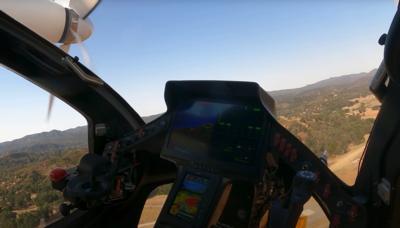
Pulling some of the flight tracking data for the N-number registered to the company paints a likely picture of what was happening: Evaluation of their prototype at speeds beyond their anticipated maximum, required performance for certification. Those familiar with FAA certification recall that aircraft are required to be capable of flying at 1.3 times their stated top speed, which would put the aircraft's velocity right in the neighborhood of the requirement just before dropping off of tracking.
The requirement ensures aircraft are designed with a valuable safety buffer. Going 30% beyond a "never exceed" speed may not be as common in a multirotor VTOL aircraft, but it's still well within the realm of reason for standard operations in descents. The lessons learned by Joby will hopefully go towards keeping their second prototype in the air - an aircraft whose birth was fortuitously timed for this occasion. Joby only recently announced a second pre-production prototype aircraft to ensure the continuation of their work on certification.
More News
From 2023 (YouTube Edition): "Ain’t Your Daddy’s Super Cub”—Don Wade Co-owned by Don and Ron Wade—the former of Don’s Dream Machines, a storied >[...]
Pilot-Rated Passenger Reported That The Pilot Did Not Adequately “Round Out” The Landing Flare And The Airplane Bounced And Yawed To The Right Analysis: The pilot state>[...]
Dead Reckoning Dead reckoning, as applied to flying, is the navigation of an airplane solely by means of computations based on airspeed, course, heading, wind direction, and speed,>[...]
Aero Linx: Lake Amphibian Club This website is created and sponsored by the Lake Amphibian Club, to help spread the word about these wonderful, versatile amphibians that can land j>[...]
“I am deeply honored to be sworn in as NASA administrator. NASA’s mission is as imperative and urgent as ever — to push the boundaries of human exploration, ignit>[...]



 Classic Aero-TV: In Praise of Alabamas Patriot Aircraft USA


 See All