Announcement Will Be Made At The 2009 Bird Strike North America
Conference
Accipiter Radar will introduce its
latest avian radar technology at the 2009 Bird Strike North America
Conference being held in Victoria, British Columbia later this
month. As exclusive title sponsor of this event, Accipiter
continues to take a leadership role in the innovation and
development of avian radar as well as sharing information with
aviation and wildlife mitigation professionals to reduce the danger
of bird strikes to aviation safety.
Multi-beam technology developed by Accipiter provides 360°
3D capabilities with information accuracy that Accipiter says will
greatly improve the potential of avian radar to provide safety
benefits in civil airport environments. “The 2009 Bird Strike
North America Conference brings together attendees from around the
globe who are eager to learn about the latest developments in bird
strike mitigation.” Dr. Tim J. Nohara, President & CEO of
Accipiter Radar noted. “We’ve made significant progress
in avian radar and we’re delighted to introduce the
world’s only 360° 3D Avian Radar technology at this
event” he added.
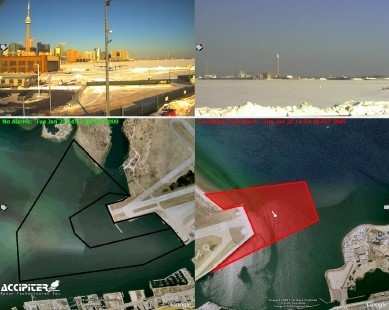
Accipiter Radar recently completed the installation and approval
of a customized Accipiter radar network at Toronto City Center
Airport, which provides automated alerts to controllers when
vessels enter marine exclusion zones that could conflict with
take-offs and landings. This is the first time a North American
airport has incorporated this technology in the tower for
operational use. The FAA chose the same Accipiter radars for its
avian radar assessment program being undertaken by CEAT (Center of
Excellence for Airport Technology). Conclusions of this assessment
will provide a foundation for an Advisory Circular from the FAA
regarding standards for avian radar use at civil airports.
Accipiter operates avian radar systems at Seattle-Tacoma
International Airport, Chicago O’Hare and JFK International,
New York under this assessment program.
Accipiter Maritime Radar
In January of this year the ditching of US Airways Flight 1549
in the Hudson River, New York brought considerable attention to the
dangers of bird strikes to aviation. In July the NTSB released
conclusions after investigating an incident in which a Cessna
500 struck one or more American White Pelicans in Oklahoma in March
2008. These included the determination that reliable information
about birds likely to be encountered near airport operations is
necessary for pilots who want to minimize bird-strike damage.
Commercially available avian radar has been proven to play an
important role in providing this information that is crucial to
aviation safety.
“This vote sends an undeniable message to Air Transat management: We are unified, resolute, and have earned a contract that reflects today’s industry standards, not the>[...]
Aero Linx: Beech Aero Club The Beech Aero Club (BAC) is the international type club for owners and pilots of the Beech Musketeer aircraft and its derivatives, the Sport, Super, Sun>[...]
While Landing In The River, The Extended Landing Gear Contacted The Water And The Airplane Nosed Over, Resulting In Substantial Damage Analysis: The pilot of the amphibious airplan>[...]
From 2022 (YouTube Edition): Carrying the Legacy of The B-29 For Generations to Come We had a chance to chat with the Executive Director of B-29 Doc, Josh Wells, during their stop >[...]
Also: Cosmonaut Kicked Out, Airbus Scales Back, AF Silver Star, Russian A-60 Clobbered A Samaritan’s Purse humanitarian flight was hijacked on Tuesday, December 2, while atte>[...]



 Aero-News: Quote of the Day (12.07.25)


 See All