Is A Taildragger The Right Thing For A Sport Pilot?
Sport pilots or pilots exercising sport pilot privileges, have a choice between tricycle gear airplanes and taildraggers. Most of the FAA type certificated sport pilot eligible airplanes are the taildragger classics like the Piper Cub series, the Aeronca Champ, the Taylorcraft, and several others.
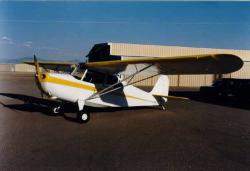
On the other hand, several manufacturers and kit producers also produce tailwheel airplanes. While the tricycle gear configuration appeals as the modern way to go, there are numerous advantages, fun being one of them, to the taildragger’s. Aren’t choices wonderful!
Myths And Facts
The “lore” of taildragger flying, according to many nosewheel pilots, is that taildraggers are difficult to takeoff and land. The mystique to many of these same pilots is that anyone who does flies a taildragger is a “real” pilot. Taildragger pilots love to promote this lore and mystique but to be truthful, it’s a myth. A “real” pilot is anyone who performs up to the standards for which he or she were trained.
The wrongly accepted lore that taildraggers need to be “tamed” is a myth that is born from the fact that very few pilots of the last 40 or 50 years received their initial training in a taildragger. These pilots have transitioned from tricycle gear to taildraggers. Any kind of transition training may often be more challenging than initial training. The reason for this is what instructors call “the law of primacy;” otherwise known as, “once learned, always learned.”
When a pilot transitions to a plane with significant differences it is often necessary to “pigeon-hole” old skills and apply new skills. That’s easier said than done. Some tricycle gear skills do not work well in a taildragger and it takes some brain twisting to transfer the skills form nosewheel to tailwheel. A 1,000 hour, high performance plane pilot will have similar challenges if he or she transitions to an LSA. It’s the change that is challenging, not just the location of the 3rd wheel. Here are some more myths and facts about taildraggers.
Fact – It is easier to transition from a taildragger to a tricycle gear plane than form tricycle to taildragger. Example: If you learn to drive in a stick shift car it’s easy to transition to an automatic transmission, but not so the other way around.
Myth – It takes longer to learn how to fly if initial training is performed in a taildragger. If there were such a thing as equal students, the training time to become a certificated pilot would be about the same for either landing gear configuration.
Myth – Taildraggers are more difficult to land in a crosswind. The skills required for landing a tricycle gear plane and a taildragger in a crosswind are the same. The difference is that a tricycle gear plane will help a pilot correct for poor crosswind skills (up to a point) and a taildragger is more intolerant of sloppy flying. Pilots of either type of plane should be skilled in crosswind techniques.
Fact – Taildraggers require more attention when taxiing in a wind. I said that the crosswind landing technique is the same for tricycle gear and tailwheel planes but the completion of the landing roll-out is different. A taildragger finishes a landing and taxies with the wing at an up angle. This means the wing may still want to fly even though the airplane is taxiing. Taxi techniques are learned to deal with this.
The difference between a flight in a tricycle gear plane and a taildragger amounts to less than 60 seconds during takeoff and landing. It’s not rocket science!
(Image from file)



 Aero-News: Quote of the Day (12.09.25)


 See All