
Air-Breathing Engine For Hypersonic Missile Successfully Tested | Aero-News Network
Aero-News Network
RSS icon RSS feed
podcast icon MP3 podcast
Subscribe Aero-News e-mail Newsletter Subscribe

Airborne Unlimited -- Most Recent Daily Episodes

Episode Date

Airborne-Monday

Airborne-Tuesday

Airborne-Wednesday Airborne-Thursday

Airborne-Friday

Airborne On YouTube

Airborne-Unlimited-12.08.25

AirborneNextGen-
12.09.25

Airborne-Unlimited-12.10.25

Airborne-FltTraining-12.04.25

AirborneUnlimited-12.05.25

AFE 2025 LIVE MOSAIC Town Hall (Archived): www.airborne-live.net

Wed, Apr 09, 2025

Air-Breathing Engine For Hypersonic Missile Successfully Tested

US, UK Teams Complete Hundreds Of Static Test Runs

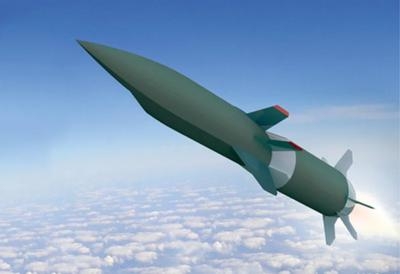
American and British teams of researchers have recently completed hundreds of successful test runs of an air-breathing engine for a hypersonic cruise missile in what is being called a critical breakthrough in countering Russian and Chinese hypersonic missile threats.

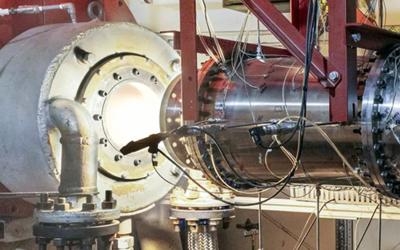
The static test runs were conducted at the NASA Langley Research Center in Virginia. More than 200 runs at a range of speeds including Mach 5, or about 3,400 mph, were performed over a six-week period. Mach 5 is considered the threshold for hypersonic speed.

The UK said in a statement that tests demonstrated “high-speed air-breathing engine” performance – enabling greater ranges than conventional rockets. Although it wasn’t made clear when the tests were performed, they included “real-time data analysis to refine design aspects and boost propulsive performance.”

The significance of air-breathing engines is that they create the chemical reaction required for fuel combustion. This eliminates the need for a separate onboard system. Sustained flight at Mach 5 or better allows a missile to potentially evade an adversary’s defense system, according to Raytheon.

For comparison, a subsonic cruise missile like a Tomahawk takes about an hour to reach a target at 500 miles but a hypersonic cruise missile would only take 10 minutes, according to Washington, D.C.-based think tank Atlantic Council.

Russia and China have already fielded several types of hypersonic missiles that threaten U.S. land and sea bases. And reportedly, North Korea and Iran have also made significant progress in hypersonic missile development and deployment.

Despite at least five years of developing long-range hypersonic weapons, the U.S. has yet to field an operational weapon. But in the fall of 2024, the U.S., the U.K., and Australia signed an agreement to allow each nation to use each other’s testing facilities and to share technical information to develop, test, and evaluate hypersonic weapons.

FMI:  https://www.nasa.gov/langley/

Advertisement

More News

Aero-News: Quote of the Day (12.07.25)

“This vote sends an undeniable message to Air Transat management: We are unified, resolute, and have earned a contract that reflects today’s industry standards, not the>[...]

ANN's Daily Aero-Linx (12.07.25)

Aero Linx: Beech Aero Club The Beech Aero Club (BAC) is the international type club for owners and pilots of the Beech Musketeer aircraft and its derivatives, the Sport, Super, Sun>[...]

NTSB Final Report: Lafferty Jack Sea Rey

While Landing In The River, The Extended Landing Gear Contacted The Water And The Airplane Nosed Over, Resulting In Substantial Damage Analysis: The pilot of the amphibious airplan>[...]

Classic Aero-TV: The B29 SuperFortress ‘Doc’ - History in Flight

From 2022 (YouTube Edition): Carrying the Legacy of The B-29 For Generations to Come We had a chance to chat with the Executive Director of B-29 Doc, Josh Wells, during their stop >[...]

Airborne 12.08.25: Samaritan’s Purse Hijack, FAA Med Relief, China Rocket Fail

Also: Cosmonaut Kicked Out, Airbus Scales Back, AF Silver Star, Russian A-60 Clobbered A Samaritan’s Purse humanitarian flight was hijacked on Tuesday, December 2, while atte>[...]

blog comments powered by Disqus



Advertisement

Advertisement

Podcasts

Advertisement

© 2007 - 2025 Web Development & Design by Pauli Systems, LC

