
TSB Investigator Blames Slick Runway For Toronto Mishap | Aero-News Network
Aero-News Network
RSS icon RSS feed
podcast icon MP3 podcast
Subscribe Aero-News e-mail Newsletter Subscribe

Airborne Unlimited -- Most Recent Daily Episodes

Episode Date

Airborne-Monday

Airborne-Tuesday

Airborne-Wednesday Airborne-Thursday

Airborne-Friday

Airborne On YouTube

Airborne-Unlimited-12.01.25

AirborneNextGen-
12.02.25

Airborne-Unlimited-12.03.25

Airborne-FltTraining-12.04.25

AirborneUnlimited-12.05.25

AFE 2025 LIVE MOSAIC Town Hall (Archived): www.airborne-live.net

Mon, Aug 08, 2005

TSB Investigator Blames Slick Runway For Toronto Mishap

Safety Board Focuses On Long Landing And Effects Of Weather

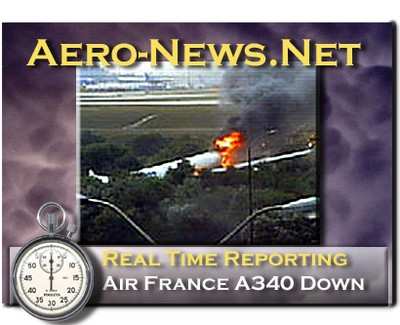
New information from Canada's TSB indicates the Air France Airbus A340 that ran off the end of the runway in Toronto and burned last week land long and fast -- with a tailwind.

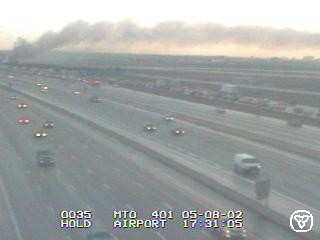
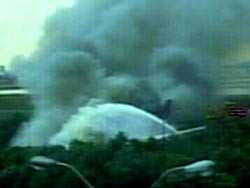
As ANN reported last week, Air France Flight 358 landed in the midst of a severe thunderstorm, rolling off the end of Runway 24L at Pearson International Airport while still going approximately 100 mph. Remarkably, none of the 309 passengers and crew aboard the aircraft was killed.

"I am pretty convinced that there was no way the aircraft was going to stop before the end with the water on the runway and the (poor) braking action," TSB lead investigator Real Levasseur told a Toronto news conference. "There was no way that aircraft was going to stop before the end (of the runway)."

Because of the water accumulated on the runway, and the fact that the A340 didn't even touch down until approximately halfway down the runway, Levasseur told reporters his team is now trying to determine the rate of deceleration once the aircraft was on the ground.

"Definitely because of the weather conditions, deceleration would have been much slower than it would be for a dry runway with maximum braking."

Levasseur seemed particularly alarmed at the failure of two emergency egress systems on board the Airbus. Although there are four cabin exits on an A340, investigators found the passengers aboard Flight 358 used only four of them. There were two reasons, he said. First, the cabin crew noticed a fire on one side of the aircraft, so they directed passengers to exit on the other side. But on one door, the emergency chute didn't inflate. On another, the chute didn't deploy at all, he said.

"If we find that they malfunctioned as a result of the accident, then I can accept that," he said. "But if we find there was a malfunction prior to the accident, then we'd want to do something about that."

FMI: www.tsb.gc.ca

Advertisement

More News

Aero-FAQ: Dave Juwel's Aviation Marketing Stories -- ITBOA BNITBOB

Dave Juwel's Aviation Marketing Stories ITBOA BNITBOB ... what does that mean? It's not gibberish, it's a lengthy acronym for "In The Business Of Aviation ... But Not In The Busine>[...]

NTSB Prelim: Rutan Long-EZ

The Pilot Attempted Several Times To Restart The Engine And Diverted To Long Beach Airport/Daughtery Field On October 20, 2025, about 1603 Pacific daylight time, an experimental am>[...]

ANN's Daily Aero-Term (12.05.25): Hazardous Weather Information

Hazardous Weather Information Summary of significant meteorological information (SIGMET/WS), convective significant meteorological information (convective SIGMET/WST), urgent pilot>[...]

Aero-News: Quote of the Day (12.05.25)

"The latest development underscores the government of Malaysia’s commitment in providing closure to the families affected by this tragedy..." Source: From statements made by >[...]

Airborne-Flight Training 12.04.25: Ldg Fee Danger, Av Mental Health, PC-7 MKX

Also: IAE Acquires Diamond Trainers, Army Drones, FedEx Pilots Warning, DA62 MPP To Dresden Tech Uni The danger to the flight training industry and our future pilots is clear. Dona>[...]

blog comments powered by Disqus



Advertisement

Advertisement

Podcasts

Advertisement

© 2007 - 2025 Web Development & Design by Pauli Systems, LC

