
Navy UAV Down In MD | Aero-News Network
Aero-News Network
RSS icon RSS feed
podcast icon MP3 podcast
Subscribe Aero-News e-mail Newsletter Subscribe

Airborne Unlimited -- Most Recent Daily Episodes

Episode Date

Airborne-Monday

Airborne-Tuesday

Airborne-Wednesday Airborne-Thursday

Airborne-Friday

Airborne On YouTube

Airborne-Unlimited-12.08.25

AirborneNextGen-
12.09.25

Airborne-Unlimited-12.10.25

Airborne-AffordableFlyers-12.11.25

AirborneUnlimited-12.12.25

AFE 2025 LIVE MOSAIC Town Hall (Archived): www.airborne-live.net

Tue, Jun 12, 2012

Navy UAV Down In MD

Officials Say Aircraft Was Conducting A Routine Maintenance Flight

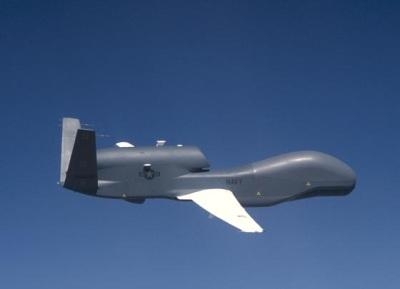
A Navy UAV has gone down on the Eastern Shore of Maryland, according to the Navy and the Coast Guard.

Initial reports are that the 44-foot UAV is part of the Navy's Patuxent River Naval Station's Unmanned Aviation and Strike Weapons program. The Associated Press reports that it went down just after noon Monday near Bloodsworth Island. No injuries were reported in connection with the accident.

The blog SeaWaves indicates that the UAV is one of five Global Hawk aircraft that was acquired from the Air Force for the Broad Area Maritime Surveillance Demonstrator program. The BAMS-D program has been working on employing high-altitude unmanned patrol aircraft since November, 2006.

According to the NAVAIR website, The Navy’s RQ-4A Global Hawk UAVs fly up to 60,000 feet. The high-flying aerial vehicle can operate for more than 30 hours above most weather. Imagery and other data obtained by the aircraft feeds by satellite into the Navy ground segment consisting of a mission control element, a launch and recovery element, and a Navy-designed Tactical Auxiliary Ground Station (TAGS). Flown by Navy and Navy contractor pilots, the asset is controlled from Naval Air Station (NAS) Patuxent River, MD.

BAMS-D was used to develop methods for integrating the Automatic Identification System (AIS) into Fleet operations. Experimentation using BAMS-D also benefited the Naval Sea Systems Command Ocean Surveillance Initiative and Oceanographer of the Navy office activities assessing usefulness of long-endurance, high-altitude unmanned systems in collecting Fleet-relevant meteorological data.

The Coast Guard has set up a safety zone around the marshy area where the aircraft went down in Dorchester County, MD, according to USCG Petty Officer Jonathan Lindberg. (File photo of Navy Global Hawk)

FMI: www.navy.mil, www.uscg.mil

Advertisement

More News

Aero-News: Quote of the Day (12.09.25)

“We respectfully call on the City of Mesa to: 1. Withdraw the landing fee proposal immediately 2. Engage with the aviation community before making decisions that impact safet>[...]

ANN's Daily Aero-Term (12.09.25): High Speed Taxiway

High Speed Taxiway A long radius taxiway designed and provided with lighting or marking to define the path of aircraft, traveling at high speed (up to 60 knots), from the runway ce>[...]

ANN's Daily Aero-Linx (12.09.25)

Aero Linx: International Federation of Airworthiness (IFA) IFA uniquely combines together all those with responsibility for policies, principles and practices concerned with the co>[...]

NTSB Final Report: Diamond Aircraft Ind Inc DA20C1 (A1); Robinson Helicopter R44

Controller’s Expectation That VW02 Would Have Departed Sooner Led To An Inadequate Scan And Loss Of Situational Awareness Analysis: A Robinson R-44 helicopter N744AF, VW02 (V>[...]

ANN FAQ: Q&A 101

A Few Questions AND Answers To Help You Get MORE Out of ANN! 1) I forgot my password. How do I find it? 1) Easy... click here and give us your e-mail address--we'll send it to you >[...]

blog comments powered by Disqus



Advertisement

Advertisement

Podcasts

Advertisement

© 2007 - 2025 Web Development & Design by Pauli Systems, LC

