
NASA Announces Next Opportunity For CubeSat Space Missions | Aero-News Network
Aero-News Network
RSS icon RSS feed
podcast icon MP3 podcast
Subscribe Aero-News e-mail Newsletter Subscribe

Airborne Unlimited -- Most Recent Daily Episodes

Episode Date

Airborne-Monday

Airborne-Tuesday

Airborne-Wednesday Airborne-Thursday

Airborne-Friday

Airborne On YouTube

Airborne-SpecialEpisode-12.15.25

AirborneNextGen-
12.16.25

Airborne-Unlimited-12.10.25

Airborne-AffordableFlyers-12.11.25

AirborneUnlimited-12.12.25

AFE 2025 LIVE MOSAIC Town Hall (Archived): www.airborne-live.net

Tue, Aug 09, 2011

NASA Announces Next Opportunity For CubeSat Space Missions

Experiments To Fly Between 2012 And 2014

NASA is seeking proposals for small satellite payloads to fly on rockets planned to launch between 2012 and 2014. These miniature spacecraft, known as CubeSats, could be included as auxiliary payload on previously planned missions.

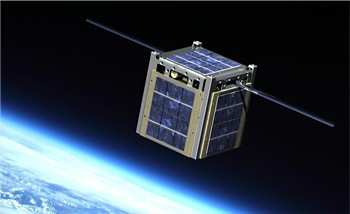
NASA CubeSat File Photo

CubeSats are a class of research spacecraft called nanosatellites. The cube-shaped satellites are approximately four inches long, have a volume of about one quart and weigh less than three pounds. Proposed CubeSat investigations must be consistent with NASA's Strategic Plan and the Education Strategic Coordination Framework. The research should address aspects of science, exploration, technology development, education or operations.

Applicants must submit proposals electronically by 1630 EDT on November 14. NASA will select the payloads by January 30, 2012. Selection does not guarantee a launch opportunity. The selected spacecraft will be eligible for flight after final negotiations when a launch opportunity arises. NASA will not provide funding for the development of the small satellites.

NASA recently announced the results from the second round of the CubeSat Launch Initiative. From the first two launch initiatives, 32 payloads made the short-list for launch opportunities in 2011 and 2012. They are eligible for launch pending an appropriate opportunity and final negotiations. The satellites come from 18 states: Alabama, Alaska, California, Colorado, Hawaii, Kentucky, Louisiana, Maryland, Massachusetts, Michigan, Missouri, Montana, New Hampshire, New Mexico, New York, Pennsylvania, Utah and Virginia.

FMI: http://go.nasa.gov/puk9K2

Advertisement

More News

ANN's Daily Aero-Term (12.19.25): Ultrahigh Frequency (UHF)

Ultrahigh Frequency (UHF) The frequency band between 300 and 3,000 MHz. The bank of radio frequencies used for military air/ground voice communications. In some instances this may >[...]

NTSB Prelim: Cirrus Design Corp SR22T

During The 7 Second Descent, There Was Another TAWS Alert At Which Time The Engine Remained At Full Power On October 24, 2025 at 2115 mountain daylight time, a Cirrus SR22T, N740TS>[...]

Classic Aero-TV: The Red Tail Project--Carrying the Torch of the Tuskegee Airmen

From 2009 (YouTube Edition): Educational Organization Aims to Inspire by Sharing Tuskegee Story Founding leader Don Hinz summarized the Red Tail Project’s mission in simple, >[...]

Aero-News: Quote of the Day (12.19.25)

“This feels like an important step since space travel for people with disabilities is still in its very early days... I’m so thankful and hope it inspires a change in m>[...]

Airborne 12.17.25: Skydiver Hooks Tail, Cooper Rotax Mount, NTSB v NDAA

Also: New Katanas, Kern County FD Training, IndiGo’s Botched Roster, MGen. Leavitt Named ERAU Dean The Australian Transportation Safety Bureau (ATSB) has wrapped up its inves>[...]

blog comments powered by Disqus



Advertisement

Advertisement

Podcasts

Advertisement

© 2007 - 2025 Web Development & Design by Pauli Systems, LC

