One P-38 Pilot, One B-17 Crewman Returned To Their
Families
The Department of Defense POW/Missing Personnel Office (DPMO)
announced this week that that the remains of two U.S. servicemen,
missing in action from World War II, have been identified and
returned to their families for burial with full military
honors.
B-17G File Photo
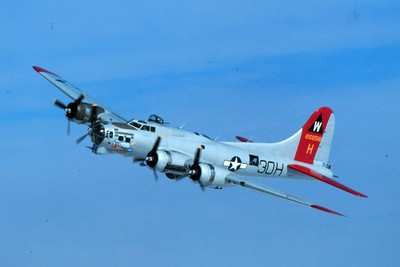
Army Air Forces Staff Sgt. John J. Bono, 28, of Denver, will be
buried on Dec. 2 in his hometown. On Sept. 13, 1944, Bono and eight
other crew members were on a B-17G Flying Fortress that crashed
near Neustaedt-on-the-Werra, Germany. Only one of the crewmen is
known to have successfully parachuted out of the aircraft before in
crashed. The remaining eight crewmen were buried by German forces
in a cemetery in Neustaedt.
Following the war, U.S. Army Graves Registration personnel
attempted to recover the remains of the eight men, but were only
able to move the remains of one man to a U.S. military cemetery in
Holland. In 1953, with access to eastern Germany restricted by the
Soviet Union, the remains of the seven unaccounted for crewmen were
declared Non-Recoverable. In 1991, a German national who was
digging a grave in the cemetery in Neustaedt, discovered a metal
U.S. military identification tag and notified officials. The U.S.
Joint POW/MIA Accounting Command (JPAC) was not able to gain access
to the site until 2007, and in 2008 excavated the area within the
cemetery, and recovered human remains, and additional metal
identification tags from three of the crewmembers, including
Bono.
To identify Bono’s remains, scientists from the JPAC used
forensic identification tools and circumstantial evidence,
including dental comparisons. Additionally, the Armed Forces DNA
Identification Laboratory used mitochondrial DNA—which
matched that of Bono’s cousin and niece—in the
identification of his remains.
The other airman was 1st Lt. Stephen L. Pascal, 20, of
Hollywood, CA, who was buried on Nov. 30, in Arlington National
Cemetery near Washington, D.C.
P-38 Lightning File Photo
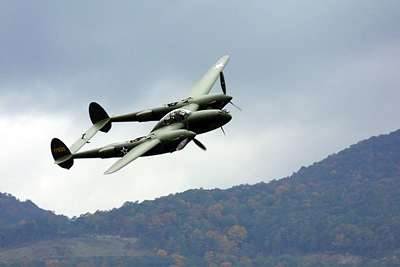
On April 7, 1945, Pascal was flying a photo reconnaissance
mission between Gottingen and Alfeld, Germany, when his P-38
Lightning aircraft, fitted for reconnaissance, went missing. An
investigation conducted after the war determined Pascal’s
aircraft exploded over the town of Gottingen. Nearby, on the same
day, 1st Lt. Newell F. Mills Jr., and his wingman, went missing in
their P-51D aircraft.
In 1947, the U.S. Army Graves Registration Service (AGRS)
exhumed remains of an American pilot, buried by local residents,
from a village cemetery in Varrigsen, Germany. The circumstantial
evidence led AGRS to believe the remains belonged to be Mills since
his aircraft was closer to that village, when it went missing, than
Pascal’s. The remains were buried in the Ardennes American
Cemetery near Neuville-en-Condroz, Belgium.
In 2004, a German civilian began excavating the crash site
associated with the airman buried in Varrigsen. Aircraft parts
recovered from the location were from a P-38
Lightning—Pascal’s aircraft—not the P-51D flown
by Mills. In 2007, the Joint POW/MIA Accounting Command (JPAC)
excavated the crash site and recovered human remains, P-38 aircraft
parts and military equipment. In 2008, JPAC exhumed the remains
thought to be Mills and examined them with the remains recovered in
2007. It was determined that the remains were all
Pascal’s.
Among forensic identification tools and circumstantial evidence,
scientists from JPAC used mitochondrial DNA—which matched
that of Pascal’s cousin—in the identification of his
remains.



 NTSB Final Report: Patriot Aircraft LLC CX1900A


 See All