

AP Study Says NextGen ATC Could Save Big Bucks On Fuel | Aero-News Network
Aero-News Network
RSS icon RSS feed
podcast icon MP3 podcast
Subscribe Aero-News e-mail Newsletter Subscribe

Airborne Unlimited -- Most Recent Daily Episodes

Episode Date

Airborne-Monday

Airborne-Tuesday

Airborne-Wednesday Airborne-Thursday

Airborne-Friday

Airborne On YouTube

Airborne-Unlimited-12.08.25

AirborneNextGen-
12.09.25

Airborne-Unlimited-12.10.25

Airborne-AffordableFlyers-12.11.25

AirborneUnlimited-12.12.25

AFE 2025 LIVE MOSAIC Town Hall (Archived): www.airborne-live.net

Sun, Oct 12, 2008

AP Study Says NextGen ATC Could Save Big Bucks On Fuel

Airlines Likely To Realize Significant Reduction In Fuel Consumption

Replacing the current ground radar-based air traffic control system with the proposed satellite-based NextGen network has the potential to save the airlines billions of dollars annually in fuel costs, according to a recent Associated Press study.

The AP analysis of federal and industry data reported that "if the new system were already in place, airlines could have saved more than $5 billion in fuel this year alone," projecting a savings of "more than $10 billion annually by 2025, based on today's fuel prices."

Many airlines which are generally supportive of NextGen have shown reluctance "to retrofit planes years, maybe decades, before the satellite network is fully operational," the AP said. Airlines, expected to contribute $15 billion toward the $35 billion project, "must equip their fleets with GPS at a cost of more than $200,000 per plane."

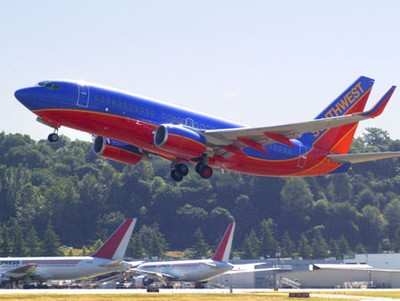
Southwest Airlines reports a whopping $175 million investment to equip 500 of its planes with GPS within a few years, allowing flights to fly more efficiently even before the full NextGen system is in place. Southwest says getting each of its planes on the ground even one minute faster would save $25 million in fuel annually.

Delayed by funding issues and the complex nature of the changeover, the government does not expect to have NextGen up and running until the early 2020s. Gerald Dillingham, director of civil aviation issues at the US Government Accountability Office, likened the process "to changing a tire on a car that's going 60 miles an hour."

Acknowledging the enormity of replacing the current system, the FAA’s Hank Krakowski called it "one of the largest project management challenges the federal government has had since we put somebody on the moon."

Robert Sturgell, acting administrator of the Federal Aviation Administration, recently said, "The United States has been to the moon and back. I think the public deserves that same level of effort for our national airspace system."

Rep. Bart Gordon, Tennessee Democrat and chairman of the House Science and Technology Committee, said, "The next president needs to make the NextGen initiative a national priority and ensure that it is given the resources, management attention and sense of urgency that it warrants."

Although many agree on the positive potential of NextGen, some feel that maintaining the current system would be money better spent. Doug Church of the National Air Traffic Controllers Association cautions that the new technology is not "a cure-all" for air travel, the AP said.

Pointing to other factors including "overbooked flights and a lack of suitable airports and runways", Church said, "GPS might be great to put in your car, too, but it's not going to get you to work any faster unless they open up another lane on the highway. And it's the same in the air."

FMI: www.faa.gov, www.natca.org

Advertisement

More News

ANN FAQ: Contributing To Aero-TV

How To Get A Story On Aero-TV News/Feature Programming How do I submit a story idea or lead to Aero-TV? If you would like to submit a story idea or lead, please contact Jim Campbel>[...]

Aero-News: Quote of the Day (12.10.25)

“As the excitement builds for the world of flight returning to Oshkosh in 2026, we wanted to ensure that advance tickets are available for those who enjoy giving AirVenture t>[...]

ANN's Daily Aero-Term (12.10.25): North Atlantic High Level Airspace (NAT HLA)

North Atlantic High Level Airspace (NAT HLA) That volume of airspace (as defined in ICAO Document 7030) between FL 285 and FL 420 within the Oceanic Control Areas of Bodo Oceanic, >[...]

Airborne 12.08.25: Samaritan’s Purse Hijack, FAA Med Relief, China Rocket Fail

Also: Cosmonaut Kicked Out, Airbus Scales Back, AF Silver Star, Russian A-60 Clobbered A Samaritan’s Purse humanitarian flight was hijacked on Tuesday, December 2, while atte>[...]

Airborne-Flight Training 12.04.25: Ldg Fee Danger, Av Mental Health, PC-7 MKX

Also: IAE Acquires Diamond Trainers, Army Drones, FedEx Pilots Warning, DA62 MPP To Dresden Tech Uni The danger to the flight training industry and our future pilots is clear. Dona>[...]

blog comments powered by Disqus



Advertisement

Advertisement

Podcasts

Advertisement

© 2007 - 2025 Web Development & Design by Pauli Systems, LC

