
Almost... Boom XB-1 Reaches Transonic Speeds in Flight 11 | Aero-News Network
Aero-News Network
RSS icon RSS feed
podcast icon MP3 podcast
Subscribe Aero-News e-mail Newsletter Subscribe

Airborne Unlimited -- Most Recent Daily Episodes

Episode Date

Airborne-Monday

Airborne-Tuesday

Airborne-Wednesday Airborne-Thursday

Airborne-Friday

Airborne On YouTube

Airborne-Unlimited-12.08.25

AirborneNextGen-
12.09.25

Airborne-Unlimited-12.10.25

Airborne-AffordableFlyers-12.11.25

AirborneUnlimited-12.12.25

AFE 2025 LIVE MOSAIC Town Hall (Archived): www.airborne-live.net

Tue, Jan 14, 2025

Almost... Boom XB-1 Reaches Transonic Speeds in Flight 11

Demonstrator Aircraft’s Next Flight Could Go Supersonic

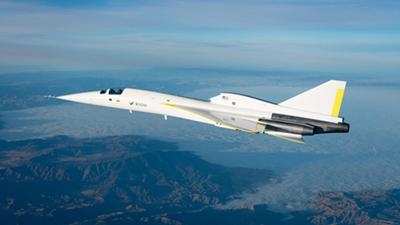
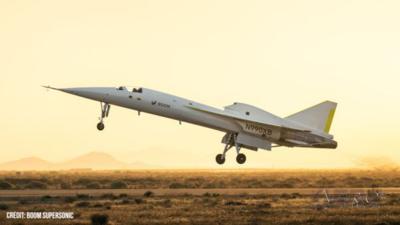
Boom Supersonic's XB-1 took its 11th test flight on January 10, edging closer to its first supersonic flight. The aircraft reached transonic speeds of Mach 0.95, or 575 knots true airspeed, during its 44-minute flight.

The flight test was conducted at California’s Mojave Air & Space Port. Chief Test Pilot Tristan “Geppetto” Brandenburg piloted the aircraft to a maximum altitude of 29,481 feet.

The primary focus of Flight 11 was expanding dynamic pressure to 383 knots equivalent airspeed (KEAS). This is the highest dynamic pressure the aircraft will ever experience, far exceeding what is anticipated during XB-1’s first supersonic flight. The stress test is crucial for validating XB-1's structural integrity and handling characteristics under extreme aerodynamic conditions.

Dynamic pressure is a critical metric in supersonic flight testing. The XB-1 team measures the aerodynamic forces on the aircraft, then carefully expands parameters like speed and pressure incrementally to validate the aircraft’s performance and refine its flight envelope. This controlled approach minimizes risks and gathers vital data to prepare for supersonic operations.

With 11 test flights now complete, XB-1 has demonstrated consistent progress in reaching its performance goals. The aircraft previously achieved new transonic benchmarks in December 2024, with Flight 10 reaching Mach 0.95 at an altitude of 32,417 feet.

The XB-1 demonstrator, nicknamed “Baby Boom,” serves as a precursor to Boom Supersonic’s Overture, a supersonic passenger jet under development. After analyzing data from Flight 11, the team will decide if additional tests are necessary before advancing to supersonic speeds. This could mean that the aircraft will be given the green light to push past the sound barrier the next time it leaves the ground. Even if another flight is needed before this milestone, the aircraft remains on track to break the sound barrier in early 2025.

FMI: www.boomsupersonic.com

Advertisement

More News

ANN's Daily Aero-Linx (12.12.25)

Aero Linx: Commercial Aviation Safety Team (CAST) Founded in 1997, the Commercial Aviation Safety Team (USCAST) has developed an integrated, data-driven strategy to reduce the comm>[...]

ANN's Daily Aero-Term (12.12.25): Land And Hold Short Operations

Land And Hold Short Operations Operations that include simultaneous takeoffs and landings and/or simultaneous landings when a landing aircraft is able and is instructed by the cont>[...]

ANN FAQ: How Do I Become A News Spy?

We're Everywhere... Thanks To You! Even with the vast resources and incredibly far-reaching scope of the Aero-News Network, every now and then a story that should be reported on sl>[...]

NTSB Final Report: Cirrus Design Corp SF50

Pilot’s Inadvertent Use Of The Landing Gear Control Handle Instead Of The Flaps Selector Switch During The Landing Rollout Analysis: The pilot reported that during the landin>[...]

Airborne 12.08.25: Samaritan’s Purse Hijack, FAA Med Relief, China Rocket Fail

Also: Cosmonaut Kicked Out, Airbus Scales Back, AF Silver Star, Russian A-60 Clobbered A Samaritan’s Purse humanitarian flight was hijacked on Tuesday, December 2, while atte>[...]

blog comments powered by Disqus



Advertisement

Advertisement

Podcasts

Advertisement

© 2007 - 2025 Web Development & Design by Pauli Systems, LC

