
Update: Joby's High-Speed Testing Ends in Crash | Aero-News Network
Aero-News Network
RSS icon RSS feed
podcast icon MP3 podcast
Subscribe Aero-News e-mail Newsletter Subscribe

Airborne Unlimited -- Most Recent Daily Episodes

Episode Date

Airborne-Monday

Airborne-Tuesday

Airborne-Wednesday Airborne-Thursday

Airborne-Friday

Airborne On YouTube

Airborne-Unlimited-12.08.25

AirborneNextGen-
12.09.25

Airborne-Unlimited-12.10.25

Airborne-AffordableFlyers-12.11.25

AirborneUnlimited-12.12.25

AFE 2025 LIVE MOSAIC Town Hall (Archived): www.airborne-live.net

Tue, Feb 22, 2022

Update: Joby's High-Speed Testing Ends in Crash

EVTOL Manufacturer Suffers Setback in Certification Process, Can it Rebound? 

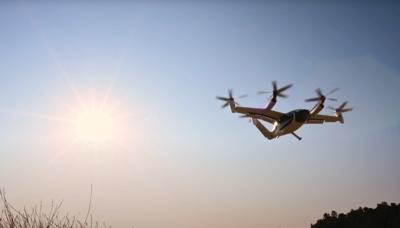
Joby Aviation's flight test accident made waves after breaking the company's stride over recent months, marking the first real unscheduled problem for the eVTOL manufacturer.

The prototype in question has been said to be used for high-speed stability testing, a conjecture supported by flight tracking data showing a speed over 270 mph not long before the crash, a fair bit faster than its nominal top speed of 200 mph. 

News broke of the incident after a mandatory SEC report was made saying as required by law to alert investors to unscheduled corporate events. The report was somewhat understandably vague, merely saying that "one of its remotely piloted, experimental prototype aircraft was involved in an accident during flight testing at our remote flight test base in California." The company recently caught the eye of some when their paperwork requesting approval for unmanned, remotely-piloted flights. Their decision to forego a pilot could well have saved a life in this instance. 

Pulling some of the flight tracking data for the N-number registered to the company paints a likely picture of what was happening: Evaluation of their prototype at speeds beyond their anticipated maximum, required performance for certification. Those familiar with FAA certification recall that aircraft are required to be capable of flying at 1.3 times their stated top speed, which would put the aircraft's velocity right in the neighborhood of the requirement just before dropping off of tracking. 

The requirement ensures aircraft are designed with a valuable safety buffer. Going 30% beyond a "never exceed" speed may not be as common in a multirotor VTOL aircraft, but it's still well within the realm of reason for standard operations in descents. The lessons learned by Joby will hopefully go towards keeping their second prototype in the air - an aircraft whose birth was fortuitously timed for this occasion. Joby only recently announced a second pre-production prototype aircraft to ensure the continuation of their work on certification.

FMI: www.jobyaviation.com

Advertisement

More News

ANN's Daily Aero-Linx (12.12.25)

Aero Linx: Commercial Aviation Safety Team (CAST) Founded in 1997, the Commercial Aviation Safety Team (USCAST) has developed an integrated, data-driven strategy to reduce the comm>[...]

ANN's Daily Aero-Term (12.12.25): Land And Hold Short Operations

Land And Hold Short Operations Operations that include simultaneous takeoffs and landings and/or simultaneous landings when a landing aircraft is able and is instructed by the cont>[...]

ANN FAQ: How Do I Become A News Spy?

We're Everywhere... Thanks To You! Even with the vast resources and incredibly far-reaching scope of the Aero-News Network, every now and then a story that should be reported on sl>[...]

NTSB Final Report: Cirrus Design Corp SF50

Pilot’s Inadvertent Use Of The Landing Gear Control Handle Instead Of The Flaps Selector Switch During The Landing Rollout Analysis: The pilot reported that during the landin>[...]

Airborne 12.08.25: Samaritan’s Purse Hijack, FAA Med Relief, China Rocket Fail

Also: Cosmonaut Kicked Out, Airbus Scales Back, AF Silver Star, Russian A-60 Clobbered A Samaritan’s Purse humanitarian flight was hijacked on Tuesday, December 2, while atte>[...]

blog comments powered by Disqus



Advertisement

Advertisement

Podcasts

Advertisement

© 2007 - 2025 Web Development & Design by Pauli Systems, LC

