Sun, Dec 22, 2013
Tracks Fused From Multiple Sensors Enables Self Separation And 'Due Regard' Operations
The first of several planned flight tests of a Sense and Avoid (SAA) architecture and Self Separation functionality has been completed by General Atomics Aeronautical Systems, Inc. (GA ASI), marking the first time the system has functioned as a true “system of systems” to detect every class of aircraft equipage and paves the way for a Due Regard capability.
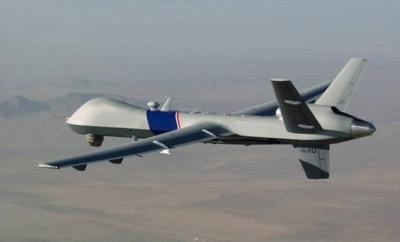
The purpose of the test was to integrate and synchronize BAE Systems’ AD/DPX-7 Identification Friend or Foe (IFF) transponder with Automatic Dependent Surveillance Broadcast (ADS-B) IN, GA-ASI’s air-to-air radar, called Due Regard Radar (DRR), and Honeywell’s Traffic Alert Collision Avoidance System (TCAS) TPA-100 to detect and track cooperative and non-cooperative aircraft. The prototype DRR tracked multiple targets of opportunity, in addition to participating aircraft, throughout 40-plus scripted encounters, including some aircraft not tracked by Air Traffic Control. Sensor data collected by these systems during the flight test will be used by the FAA and industry participants to develop and further refine their algorithms, which will in turn lead to a proof-of-concept SAA system including Collision Avoidance.
“We are working closely with the FAA, NASA, the U.S. Department of Homeland Security [DHS], and our industry alliances to advance the safe and efficient integration of unmanned aircraft systems into domestic and international airspace,” said Frank W. Pace, president, Aircraft Systems Group, GA-ASI. “Our Sense and Avoid capability is a key part of that goal, and we continue to make ongoing progress towards this end.”
The flight test occurred November 18-20 at GA-ASI’s Gray Butte Flight Operations Facility in Palmdale, CA. During the test, a company-owned Predator B leveraged its SAA system to detect two participating intruder aircraft with all three sensors. The Honeywell sensor fusion algorithm excelled in combining the multiple sensors’ outputs and fusing them into a single track picture to send to the ground. Tracks were displayed in the ground control station using GA-ASI’s Conflict Prediction and Display System (CPDS), which is designed to aid pilots in making maneuvers to remain well clear of other traffic.
The results of this flight test follow GA-ASI’s successful demonstration and follow-on integration of ADS-B aboard DHS/Customs and Border Protection’s (CBP’s) Guardian RPA (the maritime variant of Predator B) in 2012 and the successful test of DRR on the company’s Predator B also last year.
(Image provided by GA ASI)
More News
Ultrahigh Frequency (UHF) The frequency band between 300 and 3,000 MHz. The bank of radio frequencies used for military air/ground voice communications. In some instances this may >[...]
During The 7 Second Descent, There Was Another TAWS Alert At Which Time The Engine Remained At Full Power On October 24, 2025 at 2115 mountain daylight time, a Cirrus SR22T, N740TS>[...]
From 2009 (YouTube Edition): Educational Organization Aims to Inspire by Sharing Tuskegee Story Founding leader Don Hinz summarized the Red Tail Project’s mission in simple, >[...]
“This feels like an important step since space travel for people with disabilities is still in its very early days... I’m so thankful and hope it inspires a change in m>[...]
Also: New Katanas, Kern County FD Training, IndiGo’s Botched Roster, MGen. Leavitt Named ERAU Dean The Australian Transportation Safety Bureau (ATSB) has wrapped up its inves>[...]



 ANN's Daily Aero-Term (12.19.25): Ultrahigh Frequency (UHF)


 See All