

Coast Guard HH-65 Rescues Stranded Boater | Aero-News Network
Aero-News Network
RSS icon RSS feed
podcast icon MP3 podcast
Subscribe Aero-News e-mail Newsletter Subscribe

Airborne Unlimited -- Most Recent Daily Episodes

Episode Date

Airborne-Monday

Airborne-Tuesday

Airborne-Wednesday Airborne-Thursday

Airborne-Friday

Airborne On YouTube

Airborne-SpecialEpisode-12.15.25

AirborneNextGen-
12.16.25

Airborne-Unlimited-12.10.25

Airborne-AffordableFlyers-12.11.25

AirborneUnlimited-12.12.25

AFE 2025 LIVE MOSAIC Town Hall (Archived): www.airborne-live.net

Wed, Apr 22, 2009

Coast Guard HH-65 Rescues Stranded Boater

Man Hoisted From Remote Beach On Catalina Island

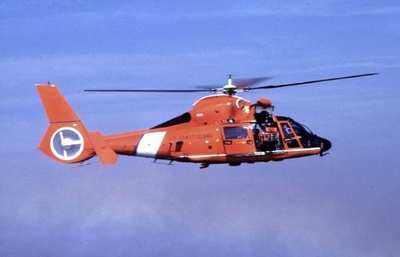
A Coast Guard air crew from Air Station Los Angeles rescued a man early this morning from a remote beach on Catalina Island.

Shortly after 6:00 a.m. the District 11 Command Center located in Alameda, Calif. received a distress alert from a personal signaling device, coming from Catalina Island. Because the signal was coming from the Los Angeles area, the case was relayed to the Sector Los Angeles – Long Beach Command Center in San Pedro, Calif.

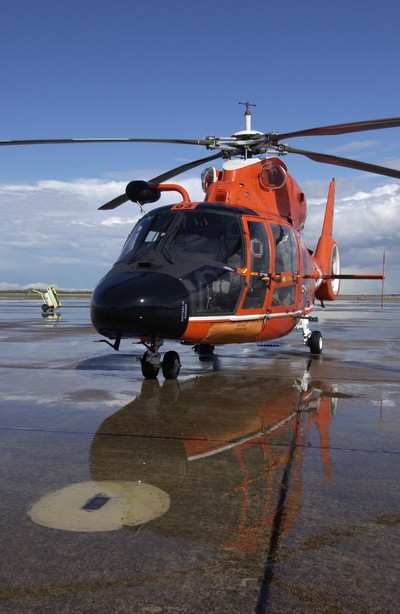
An HH-65 Dolphin helicopter was launched from Air Station Los Angeles. Once on scene, the helicopter crew spotted a man firing a flare from a beach on the south side of the Island. The man reported that his boat had caught fire last night and he had abandoned ship. He reached the shore in his dinghy where he spent the night.

The man was hoisted into the helicopter and transferred to Air Station Los Angeles, where he was met by paramedics to be treated for hypothermia.

"This really turned out to be a picture perfect scenario with respect to what to do in a survival situation," rescue swimmer Chief Albie Amescua said, "The use of the personnel locator beacon and flare, without a doubt, allowed rescuers to be notified and the survivor to be found. Without the PLB and flare, it is uncertain just how long it may have taken to locate and rescue the individual."

Although recreational boaters are not required to carry distress alerting devices, The Coast Guard advises that devices such as an Emergency Position Indicating Radio Beacon (EPIRB) or Personal Locator Beacons (PLBS), are strongly recommended for ALL boaters, including kayaks and other paddle craft, along with a VHF-FM marine band radio.

FMI: www.uscg.mil

Advertisement

More News

ANN's Daily Aero-Term (12.19.25): Ultrahigh Frequency (UHF)

Ultrahigh Frequency (UHF) The frequency band between 300 and 3,000 MHz. The bank of radio frequencies used for military air/ground voice communications. In some instances this may >[...]

NTSB Prelim: Cirrus Design Corp SR22T

During The 7 Second Descent, There Was Another TAWS Alert At Which Time The Engine Remained At Full Power On October 24, 2025 at 2115 mountain daylight time, a Cirrus SR22T, N740TS>[...]

Classic Aero-TV: The Red Tail Project--Carrying the Torch of the Tuskegee Airmen

From 2009 (YouTube Edition): Educational Organization Aims to Inspire by Sharing Tuskegee Story Founding leader Don Hinz summarized the Red Tail Project’s mission in simple, >[...]

Aero-News: Quote of the Day (12.19.25)

“This feels like an important step since space travel for people with disabilities is still in its very early days... I’m so thankful and hope it inspires a change in m>[...]

Airborne 12.17.25: Skydiver Hooks Tail, Cooper Rotax Mount, NTSB v NDAA

Also: New Katanas, Kern County FD Training, IndiGo’s Botched Roster, MGen. Leavitt Named ERAU Dean The Australian Transportation Safety Bureau (ATSB) has wrapped up its inves>[...]

blog comments powered by Disqus



Advertisement

Advertisement

Podcasts

Advertisement

© 2007 - 2025 Web Development & Design by Pauli Systems, LC

