
NTSB Issues Safety Recommendation Affecting Cessna 150s | Aero-News Network
Aero-News Network
RSS icon RSS feed
podcast icon MP3 podcast
Subscribe Aero-News e-mail Newsletter Subscribe

Airborne Unlimited -- Most Recent Daily Episodes

Episode Date

Airborne-Monday

Airborne-Tuesday

Airborne-Wednesday Airborne-Thursday

Airborne-Friday

Airborne On YouTube

Airborne-SpecialEpisode-12.15.25

AirborneNextGen-
12.16.25

Airborne-Unlimited-12.10.25

Airborne-AffordableFlyers-12.11.25

AirborneUnlimited-12.12.25

AFE 2025 LIVE MOSAIC Town Hall (Archived): www.airborne-live.net

Thu, Mar 22, 2007

NTSB Issues Safety Recommendation Affecting Cessna 150s

Calls For AD To Inspect Rudder Boots

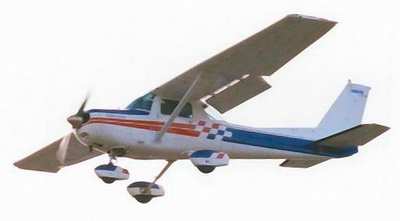
On Wednesday, the National Transportation Safety Board issued Safety Recommendation A-07-33, calling on the FAA to make a current service bulletin mandatory for Cessna 150 operators, in the form of an airworthiness directive.

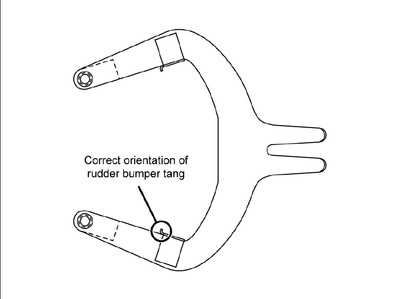
In response to an April 11, 2005 stall-spin accident near Williamsburg, OH -- in which the rudder of a Cessna 150 jammed during spin recovery training -- the NTSB says operators of the type should heed Cessna Service Bulletin No. SEB01-1, calling for all C150 and C152 models to undergo a one-time inspection at the next 100-hour or annual inspection, to verify that the rudder bumpers are correctly installed on the rudder horn assembly.

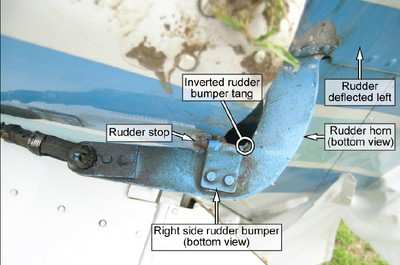
Investigators found the rudder boots on the accident aircraft had been installed inverted, and that the right rudder bumper had traveled beyond the rudder stop and had locked behind it -- causing the rudder to jam left at a 35 degree angle, past its travel limit. Both pilots onboard the C150 died when it spiraled down.

The investigation could not determine whether the incorrect installation of the rudder bumpers occurred at the time of production or during the airplane’s maintenance history. Review of the maintenance records indicated no record of work having been performed on the rudder bumpers during the airplane’s 28-year history, according to the NTSB.

The Board added a similar accident occurred on a Canadian C152 in 1998. A CFI and a student pilot were practicing spins, and were unable to recover from one. The CFI was killed, the student pilot sustained serious injuries, and the airplane was substantially damaged. During its investigation, the Transportation Safety Board of Canada (TSB) found that, although the rudder bumpers were installed correctly on this airplane, the rudder had deflected at 34° and had jammed beyond its left travel limit.

The TSB also found the right rudder bumper had traveled beyond the rudder stop and had locked behind it.

FMI: Read The Full NTSB Recommendation (.pdf)

Advertisement

More News

ANN's Daily Aero-Term (12.19.25): Ultrahigh Frequency (UHF)

Ultrahigh Frequency (UHF) The frequency band between 300 and 3,000 MHz. The bank of radio frequencies used for military air/ground voice communications. In some instances this may >[...]

NTSB Prelim: Cirrus Design Corp SR22T

During The 7 Second Descent, There Was Another TAWS Alert At Which Time The Engine Remained At Full Power On October 24, 2025 at 2115 mountain daylight time, a Cirrus SR22T, N740TS>[...]

Classic Aero-TV: The Red Tail Project--Carrying the Torch of the Tuskegee Airmen

From 2009 (YouTube Edition): Educational Organization Aims to Inspire by Sharing Tuskegee Story Founding leader Don Hinz summarized the Red Tail Project’s mission in simple, >[...]

Aero-News: Quote of the Day (12.19.25)

“This feels like an important step since space travel for people with disabilities is still in its very early days... I’m so thankful and hope it inspires a change in m>[...]

Airborne 12.17.25: Skydiver Hooks Tail, Cooper Rotax Mount, NTSB v NDAA

Also: New Katanas, Kern County FD Training, IndiGo’s Botched Roster, MGen. Leavitt Named ERAU Dean The Australian Transportation Safety Bureau (ATSB) has wrapped up its inves>[...]

blog comments powered by Disqus



Advertisement

Advertisement

Podcasts

Advertisement

© 2007 - 2025 Web Development & Design by Pauli Systems, LC

