AIRE Initiative Uses Existing Technology To Fly More 'Environmentally Friendly' Trajectories
The Single European Sky ATM Research Joint Undertaking (SESAR JU) is co-financing a third series of pre-operational demonstration projects to accelerate adoption of environmentally friendly Air Traffic Management (ATM) operations.
After more than 10,000 green commercial flights, the new Atlantic Interoperability Initiative to Reduce Emissions (AIRE) program will include nine new projects involving 31 airport, air navigation service providers (ANSP) and airline partners in 14 geographical locations. The aim of this collaborative effort is to show that it is possible to fly more environmentally friendly trajectories with commercial flights, using current technologies.
AIRE is a program first launched in 2007 by the European Commission and the United States’ Federal Aviation Administration to improve flights’ energy efficiency, lower engine emissions and reduce aircraft noise. Since 2008, SESAR JU is managing the European side of the program through collaborative projects involving multiple ATM stakeholders (airports, ANSPs, airlines and industries). The first two waves of AIRE demonstrations in 2009 and 2010/11 have proven that fuel burn - therefore CO2 emissions - can be significantly reduced through a partnership approach, utilising today’s technologies. The gains achieved in AIRE I and AIRE II were quite significant (up to 3% savings on fuel and CO2 emissions), while the investment was minimal - and mainly based on the design and training of new operational procedures. It was clearly a win-win initiative in which a number of trial procedures have now become everyday operations.
The 2012/13 wave of demonstrations (or AIRE III), is building on insights gained through the previous activities and expanding the program’s scope. New geographical locations are integrated, new partners are involved, new areas of efficiency are trialled, so that solutions proven successful can be industrialised quicker, by a wider aviation community.
Pre-operational AIRE projects will see the light in Hungary, the South Atlantic (Canarias FIR, and potentially Sal, Dakar and Recife ACCs), Italy, and Latvia. They will allow optimisation of operations for terminal, and oceanic/en route. In Hungary, the aim is to accomplish more fuel-efficient climbs and descents through Continuous descent approach (CDA) and Continuous climb departure (CDD) in one of Central Europe’s busy airports: Budapest. In the South Atlantic and Italy, reducing CO2 emissions will be achieved via Flexible or Free route, a procedure allowing aircrafts to choose their optimised route. In Riga, demonstrations aim to prove CO2 emission and noise level reductions through more direct routing thanks to Performance Base Navigation (PBN).
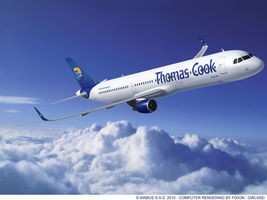
For this wave of demonstrations, many new airlines have joined the program, including low cost carriers. Air Baltic, Air Berlin, Alitalia, Easy Jet Airlines, SATA, Thomas Cook Airlines and Wizz Air are the newcomers. They join previous AIRE airline partners such as Air Europa, Air France, Iberia and TAP Air Portugal. New ANSPs include ENAV (Italy), HungaroControl (Hungary), and LGS (Latvia). They complement AIRE-experienced ANSP partners including AENA (Spain), DSNA (France), NAV CANADA, NAV-Portugal and Skyguide (Switzerland).
“I am very satisfied that the SESAR JU is able to continue to support ATM environmental optimisations, allowing operators to achieve significant savings in fuel while reducing their environmental footprint. AIRE has become an industry benchmark triggering change in Europe and in the North. “ Patrick Ky, Executive Director, SESAR Joint Undertaking



 ANN's Daily Aero-Linx (12.12.25)


 See All