
AD: Pratt & Whitney Division Turbofan Engines | Aero-News Network
Aero-News Network
RSS icon RSS feed
podcast icon MP3 podcast
Subscribe Aero-News e-mail Newsletter Subscribe

Airborne Unlimited -- Most Recent Daily Episodes

Episode Date

Airborne-Monday

Airborne-Tuesday

Airborne-Wednesday Airborne-Thursday

Airborne-Friday

Airborne On YouTube

Airborne-Unlimited-12.08.25

AirborneNextGen-
12.02.25

Airborne-Unlimited-12.03.25

Airborne-FltTraining-12.04.25

AirborneUnlimited-12.05.25

AFE 2025 LIVE MOSAIC Town Hall (Archived): www.airborne-live.net

Wed, Mar 10, 2021

AD: Pratt & Whitney Division Turbofan Engines

AD 2021-05-51 Prompted By The In-Flight Failure Of A 1st-Stage Low-Pressure Compressor (LPC) Blade On A PW4077

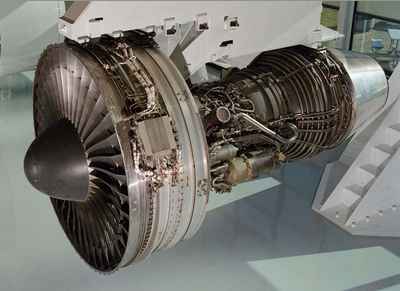
The FAA is adopting a new airworthiness directive (AD) for certain Pratt & Whitney Division (PW) PW4074, PW4074D, PW4077, PW4077D, PW4084D, PW4090, and PW4090-3 model turbofan engines.

This AD was prompted by the in-flight failure of a 1st-stage low-pressure compressor (LPC) blade on a PW4077 model turbofan engine resulting in an engine fire during flight. This AD requires performing a thermal acoustic image (TAI) inspection for cracks in certain 1st-stage LPC blades and removal of those blades that fail inspection. The FAA previously sent an emergency AD to all known U.S. owners and operators of these engines and is now issuing this AD to address the unsafe  condition on these products. This AD is effective March 24, 2021. Emergency AD 2021-05-51, issued on February 23, 2021, which contained the requirements of this amendment, was effective with actual notice.

Supplementary Information: On February 23, 2021, the FAA issued Emergency AD 2021-05-51 (the emergency AD), which requires performing a TAI inspection for cracks in certain 1st-stage LPC blades and removal of those blades that fail inspection. The FAA sent the emergency AD to all known U.S. owners and operators of these engines. That action was prompted by the in-flight failure of a 1st-stage LPC blade on a PW4077 model turbofan engine resulting in an engine fire during flight. This condition, if not addressed, could result in 1st-stage LPC blade release, damage to the engine, and damage to the airplane.

FMI: www.regulations.gov

Advertisement

More News

NTSB Final Report: Patriot Aircraft LLC CX1900A

After Draining Both Wing Fuel Tanks, A Significant Amount Of Water Was Observed In The Right Wing Fuel Tank Analysis: The pilot, who was also the owner of the experimental amateur->[...]

Aero-News: Quote of the Day (12.06.25)

“Airbus apologises for any challenges and delays caused to passengers and airlines by this event. The Company thanks its customers, the authorities, its employees and all rel>[...]

ANN's Daily Aero-Term (12.06.25): High Speed Taxiway

High Speed Taxiway A long radius taxiway designed and provided with lighting or marking to define the path of aircraft, traveling at high speed (up to 60 knots), from the runway ce>[...]

ANN's Daily Aero-Linx (12.06.25)

Aero Linx: Taylorcraft Foundation, Inc. The Taylorcraft Foundation is exclusively organized for charitable, educational & scientific activities and will preserve the history an>[...]

Airborne-NextGen 12.02.25: Honda eVTOL, Arctus High-Alt UAS, Samson Patent

Also: USAF Reaper Accident, Baikonur Damage, Horizon eVTOL IFR/FIKI, New Glenn Update Honda has outlined its clearest timeline yet for its entry into the world of electric vertical>[...]

blog comments powered by Disqus



Advertisement

Advertisement

Podcasts

Advertisement

© 2007 - 2025 Web Development & Design by Pauli Systems, LC

