FASTRACK To Be Used On Reusable Suborbital Spacecraft
 A new space experiment rack under development by NASA's Kennedy
Space Center, FL and Space Florida will undergo initial tests this
week. The rack will fly aboard NASA's first commercially-provided
research flights on Zero Gravity Corporation's reduced gravity
aircraft.
A new space experiment rack under development by NASA's Kennedy
Space Center, FL and Space Florida will undergo initial tests this
week. The rack will fly aboard NASA's first commercially-provided
research flights on Zero Gravity Corporation's reduced gravity
aircraft.
Flight testing of the FASTRACK Space Experiment Platform will be
performed on four consecutive days between September 9-12 from
Ellington Field near NASA's Johnson Space Center in Houston,
TX.
The experiment rack is designed to support two standard lockers
that fit inside the space shuttle's crew middeck. It is being
developed jointly by Kennedy and Space Florida to facilitate NASA
and commercial use of reusable US suborbital flight vehicles
currently under development. The rack also will accommodate
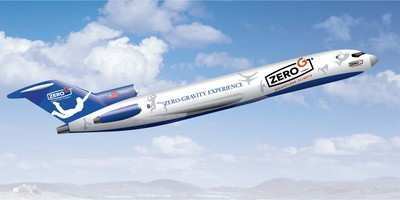
experiments aboard reduced gravity aircraft such as Zero Gravity's
modified Boeing 727, and may also be adapted in the future for
orbiting vehicles and facilities.
FASTRACK will enable investigators to test experiments,
apparatus and analytical techniques in hardware compatible with the
International Space Station, and to perform science that can be
carried out during the reduced gravity available for brief periods
during aircraft parabolas. FASTRACK is designed to accommodate two
single middeck lockers or one double locker, and other compatible
experiment accommodations developed for use on the space shuttle
and International Space Station.
Kennedy's FASTRACK project team will use NASA's commercial
flight services contract with Zero Gravity Corporation to install
and test a prototype rack along with three science investigations
to verify interfaces, procedures and performance characteristics
prior to fabrication of the FASTRACK flight units.
The three science investigations that will be performed on the
flights this week are: baseline characterization data of the
microgravity environment in the FASTRACK payload accommodations
using instrumentation provided by NASA's Glenn Research Center; a
fluid dynamics experiment by the University of Central Florida to
study Faraday wave interfaces in microgravity; and tests of a
biomedical sensor to evaluate its effectiveness in performing
continuous, non-invasive monitoring and recording of human
hemodynamics, or the movement of blood, during changes in
gravity.
Another potential group of customers will be those participating
in NASA's Facilitated Access to the Space Environment for
Technology Development and Training, or FAST, Program. The FAST
Program, which is managed by the Innovative Partnerships Program,
will provide reduced-gravity or suborbital testing opportunities
for emerging technologies developed by small businesses and others
in partnerships with NASA.
With the expected emergence of commercial suborbital flights
over the next few years, FASTRACK will support investigations that
can benefit from longer exposure -- between 2-3 minutes -- of
microgravity time, as well as actual spaceflight conditions.
The flights are sponsored and funded by NASA's Strategic
Capabilities and Assets Program under the agency's commercial
microgravity services contract with Zero Gravity Corporation.
The FASTRACK project has received support from the NASA
Innovative Partnerships Program Office and the NASA Science Mission
Directorate. It is being jointly developed under a Space Act
Agreement between Kennedy and Space Florida, both of which have
contracted with the Bionetics Corporation to accomplish design,
fabrication and testing of the experiment rack. FASTRACK is a
trademark of the National Aeronautics and Space Administration.



 NTSB Final Report: Patriot Aircraft LLC CX1900A


 See All