Sun, May 16, 2010
Sky Connect Flight-Following Equipment One Key To Battling
Wildfires More Effectively
 Flight-following technology from EMS Aviation shared the
spotlight with California Governor Arnold Schwarzenegger May 3, as
he watched a real-time demonstration of the state’s new
aircraft tracking system technology. The governor also signed an
Executive Order mobilizing the California Department of Forestry
and Fire Protection (CAL FIRE) to be prepared and vigilant as the
state approaches peak fire season.
Flight-following technology from EMS Aviation shared the
spotlight with California Governor Arnold Schwarzenegger May 3, as
he watched a real-time demonstration of the state’s new
aircraft tracking system technology. The governor also signed an
Executive Order mobilizing the California Department of Forestry
and Fire Protection (CAL FIRE) to be prepared and vigilant as the
state approaches peak fire season.
EMS Aviation said in a news release Thursday that it has
delivered 20 of 66 Automatic Flight-Following (AFF) systems to CAL
FIRE, and 17 systems are in operation. CAL FIRE plans to equip its
fleet of 53 fixed-wing and rotary-wing aircraft with AFF systems by
June, according to Chief Del Walters, CAL FIRE director. EMS
Aviation is the world’s leading provider of Iridium-based
voice and tracking systems for aircraft.
The governor told an assembled crowd that equipping the CAL FIRE
fleet with flight-following technology is one way the state will
maximize its firefighting capabilities. “We need every tool
at our disposal. This year, for the first time, we will employ
special GPS technology to track aircraft for more rapid and
efficient response to wildfires,” he said. “We will not
be caught off-guard or under-equipped.”
Walters agreed that the EMS Aviation systems help CAL FIRE
deploy its firefighting aircraft more efficiently. “Not only
will we know where the aircraft are, we’ll know where they
are in relation to an emerging incident, so we’ll know the
fastest tool to dispatch.” On average, CAL FIRE responds to
5,000 wildfires a year. Last year the agency responded to 7,000
incidents.
“We believe having the latest in tracking technology will
be increasingly important as states like California see intensified
and extended fire-fighting seasons. We hope to build on this
strategic relationship with CAL FIRE to showcase how real-time
position-reporting can help other states and countries manage their
fire-fighting resources effectively,” said Nim Evatt, vice
president and general manager of EMS Aviation.
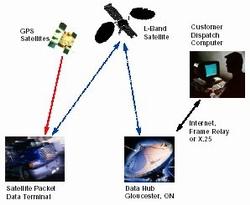
When an aircraft is equipped with AFF, dispatchers are regularly
updated on its position and flight status with no active pilot
input. Reporting intervals are generally every two minutes but may
be customized based on operator preference. Flight data is also
recorded, and the information collected is instrumental in case of
an accident or incident. Aircraft must be equipped with AFF in
order to be considered for government contracts in the U.S. and
Canada.
More News
Ultrahigh Frequency (UHF) The frequency band between 300 and 3,000 MHz. The bank of radio frequencies used for military air/ground voice communications. In some instances this may >[...]
During The 7 Second Descent, There Was Another TAWS Alert At Which Time The Engine Remained At Full Power On October 24, 2025 at 2115 mountain daylight time, a Cirrus SR22T, N740TS>[...]
From 2009 (YouTube Edition): Educational Organization Aims to Inspire by Sharing Tuskegee Story Founding leader Don Hinz summarized the Red Tail Project’s mission in simple, >[...]
“This feels like an important step since space travel for people with disabilities is still in its very early days... I’m so thankful and hope it inspires a change in m>[...]
Also: New Katanas, Kern County FD Training, IndiGo’s Botched Roster, MGen. Leavitt Named ERAU Dean The Australian Transportation Safety Bureau (ATSB) has wrapped up its inves>[...]



 ANN's Daily Aero-Term (12.19.25): Ultrahigh Frequency (UHF)


 See All