
AD: General Electric Company Turbofan Engines | Aero-News Network
Aero-News Network
RSS icon RSS feed
podcast icon MP3 podcast
Subscribe Aero-News e-mail Newsletter Subscribe

Airborne Unlimited -- Most Recent Daily Episodes

Episode Date

Airborne-Monday

Airborne-Tuesday

Airborne-Wednesday Airborne-Thursday

Airborne-Friday

Airborne On YouTube

Airborne-Unlimited-12.01.25

AirborneNextGen-
12.02.25

Airborne-Unlimited-12.03.25

Airborne-AffordableFlyers-11.20.25

AirborneUnlimited-11.21.25

LIVE MOSAIC Town Hall (Archived): www.airborne-live.net

Tue, Jul 05, 2022

AD: General Electric Company Turbofan Engines

AD 2022-13-12 Prompted By Fuel Leakage From The Fuel Nozzle To Fuel Manifold Coupling Nut Connections

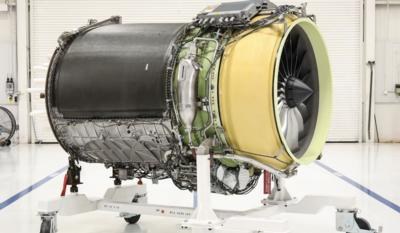
The FAA is adopting a new airworthiness directive (AD) for all General Electric Company (GE) GE Passport 20-17BB1A, GE Passport 20-18BB1A, and GE Passport 20-19BB1A model turbofan engines.

This AD was prompted by fuel leakage from the fuel nozzle to fuel manifold coupling nut connections. This AD requires a visual inspection of the core compartment, a re-torque of the core compartment coupling nuts, a ground power assurance check, and a borescope inspection. Depending on the results of the inspections, this AD requires operators to perform applicable maintenance in accordance with their FAA-approved instructions for continued airworthiness. The FAA is issuing this AD to address the unsafe condition on these products. This AD is effective July 14, 2022. 

Supplementary Information: On March 31, 2022, and April 4, 2022, two Bombardier Inc. BD-700-2A12 airplanes (marketed as Global 7500 airplanes), powered by GE Passport P20-19BB1A and GE Passport P20-18BB1A model turbofan engines, respectively, experienced an engine fire during flight. The engine fire on the GE Passport P20-19BB1A resulted in a commanded in-flight shutdown (IFSD) and air turnback (ATB). The engine fire on the GE Passport P20-18BB1A resulted in an ATB. A subsequent investigation by the manufacturer found evidence of fuel leakage on the lower outboard core panel, aft end of the bifi plate, ignition lead, and fuel manifold B-nut connections. The investigation also found that fuel nozzle to fuel manifold B-nut connections were under-torqued on both event engines and the fuel leak at the fuel nozzle B-nut connections likely caused the engine fires. As a result, the manufacturer published GE Service Bulletin (SB) PASSPORT20-A-72-00-0141-00A-930A-D, Issue No 000, dated April 12, 2022, and GE SB PASSPORT20-A-72-00-0142-00A-930A-D, Issue No 001, dated May 11, 2022. The service information specifies procedures for the performance of a visual inspection of the fuel nozzle zone in the core compartment for indications of fuel leakage, undetected fire, or heat distress, re-torque of the coupling nuts in the core compartment, a ground power assurance check, and a borescope inspection. This condition, if not addressed, could result in engine fire, failure of the engine, in-flight shutdown, and loss of the airplane. The FAA is issuing this AD to address the unsafe condition on these products.

FMI: www.regulations.gov

Advertisement

More News

Classic Aero-TV: VerdeGo Debuts VH-3 Hybrid-Electric Powerplant

From 2023 (YouTube Edition): New Propulsion Scheme Optimized for AAM Applications Founded in 2017 by Eric Bartsch, Pat Anderson, and Erik Lindbergh (grandson of famed aviation pion>[...]

NTSB Prelim: Grumman American Avn. Corp. AA-5B

During The Initial Climb, The Engine Began To Operate Abnormally And, After About Three Seconds, Experienced A Total Loss Of Power On October 29, 2025, about 1820 Pacific daylight >[...]

ANN's Daily Aero-Linx (12.02.25)

Aero Linx: Women in Aviation International Women in Aviation International is the largest nonprofit organization that envisions a world where the sky is open to all, and where avia>[...]

Aero-News: Quote of the Day (12.02.25)

“We’ve paid for the cable line’s repair for the customer and have apologized for the inconvenience this caused them...” Source: Some followup info from an A>[...]

Aero-News: Quote of the Day (12.03.25)

“We have long warned about the devastating effects of pairing optimization. Multiple times over many months, we highlighted how schedule manipulation, unbalanced schedules, a>[...]

blog comments powered by Disqus



Advertisement

Advertisement

Podcasts

Advertisement

© 2007 - 2025 Web Development & Design by Pauli Systems, LC

