

NASA Amends Crew Assignment for STS-126 Mission | Aero-News Network
Aero-News Network
RSS icon RSS feed
podcast icon MP3 podcast
Subscribe Aero-News e-mail Newsletter Subscribe

Airborne Unlimited -- Most Recent Daily Episodes

Episode Date

Airborne-Monday

Airborne-Tuesday

Airborne-Wednesday Airborne-Thursday

Airborne-Friday

Airborne On YouTube

Airborne-SpecialEpisode-12.15.25

AirborneNextGen-
12.16.25

Airborne-Unlimited-12.10.25

Airborne-AffordableFlyers-12.11.25

AirborneUnlimited-12.12.25

AFE 2025 LIVE MOSAIC Town Hall (Archived): www.airborne-live.net

Fri, Nov 23, 2007

NASA Amends Crew Assignment for STS-126 Mission

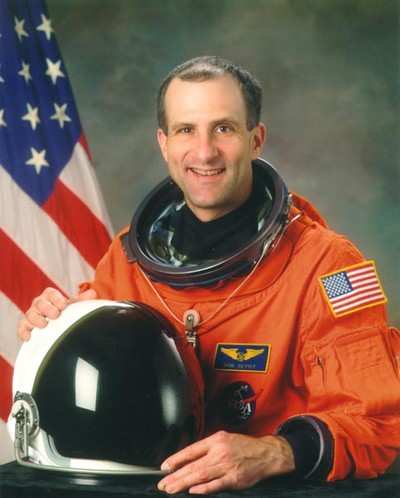
NASA has replaced a crew member assigned to space shuttle mission STS-126. Astronaut Donald R. Pettit will take the place of astronaut Joan E. Higginbotham (pictured below), who has left NASA to accept a position in the private sector. The mission is targeted to launch in September 2008 and will deliver equipment to the International Space Station enabling larger crews to reside aboard the complex.

Higginbotham flew as a mission specialist on STS-116 in December 2006. She began her career at NASA's Kennedy Space Center, Fla., in 1987, contributing to 53 space shuttle launches. She was selected as an astronaut in 1996.

"Joan has done a tremendous job as an astronaut during the past 11 years," said Steve Lindsey, chief of the Astronaut Office at NASA's Johnson Space Center, Houston. "She contributed her expertise to nearly every space shuttle and International Space Station mission. She will be missed, but we wish her the very best in her future endeavors."

The STS-126 mission will be Pettit's (pictured above) second spaceflight. Pettit will serve as a mission specialist aboard shuttle Endeavour. He joins previously named crew members Commander Christopher J. Ferguson, Pilot Eric A. Boe and mission specialists Stephen G. Bowen, Robert S. Kimbrough and Heidemarie M. Stefanyshyn-Piper.

Pettit first flew as a crew member of Expedition 6, logging more than 161 days in space, including more than 13 hours during two spacewalks. He launched to the station aboard shuttle mission STS-113 in November 2002 and returned to Earth on the Soyuz TMA-1 spacecraft in May 2003. He was selected as an astronaut in 1996.

FMI: www.nasa.gov/shuttle

Advertisement

More News

ANN's Daily Aero-Term (12.19.25): Ultrahigh Frequency (UHF)

Ultrahigh Frequency (UHF) The frequency band between 300 and 3,000 MHz. The bank of radio frequencies used for military air/ground voice communications. In some instances this may >[...]

NTSB Prelim: Cirrus Design Corp SR22T

During The 7 Second Descent, There Was Another TAWS Alert At Which Time The Engine Remained At Full Power On October 24, 2025 at 2115 mountain daylight time, a Cirrus SR22T, N740TS>[...]

Classic Aero-TV: The Red Tail Project--Carrying the Torch of the Tuskegee Airmen

From 2009 (YouTube Edition): Educational Organization Aims to Inspire by Sharing Tuskegee Story Founding leader Don Hinz summarized the Red Tail Project’s mission in simple, >[...]

Aero-News: Quote of the Day (12.19.25)

“This feels like an important step since space travel for people with disabilities is still in its very early days... I’m so thankful and hope it inspires a change in m>[...]

Airborne 12.17.25: Skydiver Hooks Tail, Cooper Rotax Mount, NTSB v NDAA

Also: New Katanas, Kern County FD Training, IndiGo’s Botched Roster, MGen. Leavitt Named ERAU Dean The Australian Transportation Safety Bureau (ATSB) has wrapped up its inves>[...]

blog comments powered by Disqus



Advertisement

Advertisement

Podcasts

Advertisement

© 2007 - 2025 Web Development & Design by Pauli Systems, LC

