
NTSB Cites Loss Of Control In RV-6 Accident | Aero-News Network
Aero-News Network
RSS icon RSS feed
podcast icon MP3 podcast
Subscribe Aero-News e-mail Newsletter Subscribe

Airborne Unlimited -- Most Recent Daily Episodes

Episode Date

Airborne-Monday

Airborne-Tuesday

Airborne-Wednesday Airborne-Thursday

Airborne-Friday

Airborne On YouTube

Airborne-Unlimited-12.08.25

AirborneNextGen-
12.09.25

Airborne-Unlimited-12.10.25

Airborne-AffordableFlyers-12.11.25

AirborneUnlimited-12.12.25

AFE 2025 LIVE MOSAIC Town Hall (Archived): www.airborne-live.net

Fri, Mar 13, 2015

NTSB Cites Loss Of Control In RV-6 Accident

Canopy Apparently Unintentionally Opened In Flight, Though Board Says It Was Unable To Confirm

The NTSB has released its probable cause report from an accident which occurred June 20, 2014 in Sauk Rapids, MN, though the final determination leaves several questions about the accident.

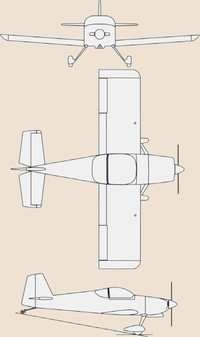
According to the report, about 5 minutes after an experimental amateur-built RV-6 airplane departed from a local airport, an air traffic controller notified the pilot that an Airbus was 30 miles southwest of the airport and inbound. About 7 minutes later, the pilot reported that he had the Airbus in sight and then stated that he was going to take a picture of it. No further communications were received from the pilot. A witness reported observing the RV-6 “rocking back and forth” before the “nose went down” and then seeing two objects come off the airplane when it entered a descent. Another witness reported hearing engine noise before observing the airplane enter a steep nose-down descent. The airplane impacted a house and was destroyed by a postimpact fire.

The two objects that the witness observed coming off the RV-6, which were a headset and PVC material, were later located near the accident site and did not exhibit thermal damage or soot. The exit of the two objects from the airplane’s interior indicates that the canopy likely opened in flight, which led to the loss of pitch control. Fire damage precluded examination of the airplane’s canopy and systems; therefore, the reason for the canopy opening in flight could not be determined. There was no radar or recorded position and time data for either airplane; therefore, the effects, if any, of wake turbulence from the Airbus on the RV-6 could not be determined.

The NTSB determined the probable cause of the accident to be the pilot’s loss of pitch control due to the in-flight opening of the canopy during cruise flight for reasons that could not be determined because fire damage precluded examination of the airplane’s canopy and systems.

FMI: Full Narrative

Advertisement

More News

ANN's Daily Aero-Linx (12.12.25)

Aero Linx: Commercial Aviation Safety Team (CAST) Founded in 1997, the Commercial Aviation Safety Team (USCAST) has developed an integrated, data-driven strategy to reduce the comm>[...]

ANN's Daily Aero-Term (12.12.25): Land And Hold Short Operations

Land And Hold Short Operations Operations that include simultaneous takeoffs and landings and/or simultaneous landings when a landing aircraft is able and is instructed by the cont>[...]

ANN FAQ: How Do I Become A News Spy?

We're Everywhere... Thanks To You! Even with the vast resources and incredibly far-reaching scope of the Aero-News Network, every now and then a story that should be reported on sl>[...]

NTSB Final Report: Cirrus Design Corp SF50

Pilot’s Inadvertent Use Of The Landing Gear Control Handle Instead Of The Flaps Selector Switch During The Landing Rollout Analysis: The pilot reported that during the landin>[...]

Airborne 12.08.25: Samaritan’s Purse Hijack, FAA Med Relief, China Rocket Fail

Also: Cosmonaut Kicked Out, Airbus Scales Back, AF Silver Star, Russian A-60 Clobbered A Samaritan’s Purse humanitarian flight was hijacked on Tuesday, December 2, while atte>[...]

blog comments powered by Disqus



Advertisement

Advertisement

Podcasts

Advertisement

© 2007 - 2025 Web Development & Design by Pauli Systems, LC

