Sun, Apr 13, 2025
Recommends Measures To Improve Safety For Aerial Applicators
In preparation for the upcoming agricultural growing season in the U.S., the National Agricultural Aviation Association (NAAA) is urging all operators of uncrewed aerial systems (UAS or drones) to be aware of low-altitude manned aircraft operations. The group has issued a set of recommendations for drone operators to do everything possible to avoid manned aircraft conducting low-altitude operations.
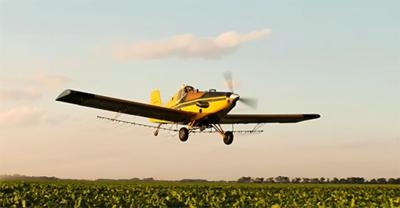
Every year, agricultural aviators apply seed, fertilizer, and crop protection measures to nearly 130 million acres of cropland in the U.S., in addition to millions of acres of pastureland, rangeland, and forests to assist farmers increase their productivity and protect their crops. Almost all of those operations involve low-altitude flight at speeds of up to 140 mph.
NAAA recommends drone operators follow these guidelines:
- Give the right of way to a manned aircraft: It’s the law.
- When you return to a field to fly a UAS, ensure that there are no manned aircraft working in the field. Fields should be scouted each time your pilot returns to the field, not only at the beginning of the application.
- Equip drones with visible strobe lights, highly visible markings and tracking technology, like an ADS-B In system.
- Monitor aviation radio frequency 122.925 MHz for crewed agricultural aircraft. To transmit, consider a radio station license by submitting FCC Form 605.
- Be certified and well-trained in operating an uncrewed aircraft.
- Contact local agricultural aviation operations before flying by consulting the Find An Aerial Applicator database at AgAviation.org.
- Land your uncrewed aircraft immediately when a low-flying aircraft is nearby.
- Carry uncrewed aircraft liability insurance.
Andrew Moore, chief executive officer of NAAA said, “With the increasing number of uncrewed aircraft operations over the last few years, their operators must be aware of low-flying, manned agricultural aircraft. It is extremely difficult, if not impossible, for manned aircraft to see a drone while conducting aerial applications 10 feet off the ground at speeds of up to 140 mph.
“UAS are not allowed above 400 feet without a waiver from the Federal Aviation Administration (FAA), meaning they share the low-altitude airspace with ag aircraft. We encourage professional and hobbyist UAS operators to keep this in mind, equip UAS with detect and avoid technology and give right-of-way to manned or crewed ag aircraft to ensure a safe 2025 growing season.”
More News
How To Get A Story On Aero-TV News/Feature Programming How do I submit a story idea or lead to Aero-TV? If you would like to submit a story idea or lead, please contact Jim Campbel>[...]
“As the excitement builds for the world of flight returning to Oshkosh in 2026, we wanted to ensure that advance tickets are available for those who enjoy giving AirVenture t>[...]
North Atlantic High Level Airspace (NAT HLA) That volume of airspace (as defined in ICAO Document 7030) between FL 285 and FL 420 within the Oceanic Control Areas of Bodo Oceanic, >[...]
Also: Cosmonaut Kicked Out, Airbus Scales Back, AF Silver Star, Russian A-60 Clobbered A Samaritan’s Purse humanitarian flight was hijacked on Tuesday, December 2, while atte>[...]
Also: IAE Acquires Diamond Trainers, Army Drones, FedEx Pilots Warning, DA62 MPP To Dresden Tech Uni The danger to the flight training industry and our future pilots is clear. Dona>[...]



 ANN FAQ: Contributing To Aero-TV


 See All