
COTS Navigation System Upgrades Fleet Capabilities | Aero-News Network
Aero-News Network
RSS icon RSS feed
podcast icon MP3 podcast
Subscribe Aero-News e-mail Newsletter Subscribe

Airborne Unlimited -- Most Recent Daily Episodes

Episode Date

Airborne-Monday

Airborne-Tuesday

Airborne-Wednesday Airborne-Thursday

Airborne-Friday

Airborne On YouTube

Airborne-Unlimited-12.01.25

AirborneNextGen-
12.02.25

Airborne-Unlimited-11.19.25

Airborne-AffordableFlyers-11.20.25

AirborneUnlimited-11.21.25

LIVE MOSAIC Town Hall (Archived): www.airborne-live.net

Wed, May 26, 2004

COTS Navigation System Upgrades Fleet Capabilities

E-2 Program Prototypes Applying Lessons Learned In Recent Conflicts

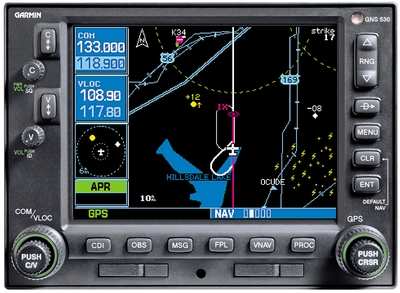
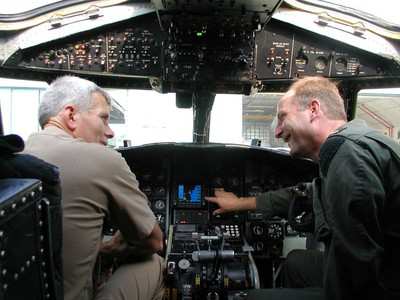
The Naval Air Systems Command has successfully prototyped a commercial navigation system currently installed in two of the US Navy’s E-2C Hawkeye aircraft. The GNS-530, originally produced for commercial aviation applications by Garmin International of Olathe, Kansas, will bring dual utility to the Hawkeye cockpit by simultaneously satisfying Communication, Navigation and Surveillance/Air Traffic Management (CNS/ATM) enhanced display requirements while also providing precision approach to the E-2C Fleet.

The possibility of incorporating the GNS-530 navigation system into the E-2C was explored following a NAVAIR analysis of alternatives to identify a system that could provide precision approach capability to the E-2C fleet quickly and cost effectively and address lessons learned during Operations Enduring Freedom and Iraqi Freedom.

Two aircraft were prototyped with the system. The first, based in Atlanta (GA) with the Night Wolves of Carrier Airborne Early Warning Squadron Seventy Seven (VAW-77), one of two E-2 Reserve squadrons, demonstrated that the GNS-530 could be successfully installed quickly and cost efficiently. The second prototype, representative of Group II aircraft in the Fleet, was based in Norfolk (VA) with the Greyhawks of Carrier Airborne Early Warning Squadron One Hundred Twenty (VAW-120). This aircraft was selected for Carrier Suitability tests with the system at NAS Patuxent River, where testing verified its ability to withstand the rigors of operating in a carrier environment. These two proof-of-concept demonstrations proved so successful that both prototyped aircraft are presently utilizing the system.

Additional test events at Patuxent River are planned this summer with the Hawkeye 2000 variant of the aircraft, which will be focusing on IFR certification and Electromagnetic Compatibility (EMC). Fleet installations of the GNS-530 in E-2C Hawkeye aircraft are anticipated to begin in 2005.

FMI: www.garmin.com

Advertisement

More News

ANN's Daily Aero-Term (11.29.25): Waypoint

Waypoint A predetermined geographical position used for route/instrument approach definition, progress reports, published VFR routes, visual reporting points or points for transiti>[...]

ANN's Daily Aero-Linx (11.29.25)

Aero Linx: Sentimental Journey to Cub Haven Sentimental Journey Flyin began in 1986 with a group of dedicated volunteers working to provide a sentimental return to Lock Haven, the >[...]

NTSB Prelim: Jabiru USA Sport Aircraft LLC J230-SP

The Pilot Would Often Fly Over Their House At A Low Altitude And That Family Members Would Go Outside To Wave On November 14, 2025, at 1708 eastern standard time, a Jabiru USA Spor>[...]

Classic Aero-TV: Crafting The Future of eVTOL Infrastructure

From 2024 (YouTube Edition): Volatus Infrastructure Paves The Way The name “Volatus” seems to be everywhere these days, popping up in a series of partnerships and proje>[...]

Klyde Morris (11.28.25)

Fortnite Conquers All, Klyde FMI: www.klydemorris.com>[...]

blog comments powered by Disqus



Advertisement

Advertisement

Podcasts

Advertisement

© 2007 - 2025 Web Development & Design by Pauli Systems, LC

