
Heart Aerospace Unveils 30-Seat Hybrid-Electric Demonstrator | Aero-News Network
Aero-News Network
RSS icon RSS feed
podcast icon MP3 podcast
Subscribe Aero-News e-mail Newsletter Subscribe

Airborne Unlimited -- Most Recent Daily Episodes

Episode Date

Airborne-Monday

Airborne-Tuesday

Airborne-Wednesday Airborne-Thursday

Airborne-Friday

Airborne On YouTube

Airborne-SpecialEpisode-12.15.25

AirborneNextGen-
12.16.25

Airborne-Unlimited-12.10.25

Airborne-AffordableFlyers-12.11.25

AirborneUnlimited-12.12.25

AFE 2025 LIVE MOSAIC Town Hall (Archived): www.airborne-live.net

Tue, Sep 17, 2024

Heart Aerospace Unveils 30-Seat Hybrid-Electric Demonstrator

Company’s ES-30 Moves Towards Electrifying Regional Air Travel

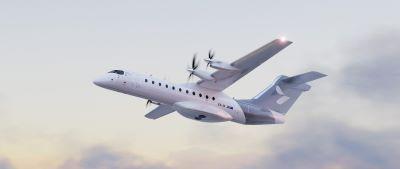
Heart Aerospace, a Swedish aircraft manufacturer, unveiled the first full-scale demonstrator of its ES-30 model on September 12. The hybrid-electric airplane is a part of the company’s work towards making air travel more sustainable.

“Our industry is approaching a 30-year innovation cycle, and we have less than 25 years to decarbonize aviation. We need to develop new methods to get net zero aerospace technologies to market faster,” stated Anders Forslund, co-founder and CEO of Heart Aerospace. “It is a testament to the ingenuity and dedication of our team that we’re able to roll out a 30-seat aircraft demonstrator with a brand-new propulsion system…in less than two years."

The ES-30 is a hybrid-electric airplane meant to support a standard 30-passenger capacity. It is intended for short-haul regional flights with an electric range of 200 km and an extended hybrid range of up to 400 km.

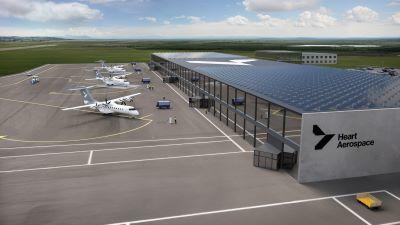
Its first full-scale demonstrator, dubbed Heart Experimental 1 or X1, was primarily built in Heart’s Gothenburg facilities. It will be used for ground-based testing with a spotlight on charging, taxiing, and turnaround operations. Heart will also run hardware tests on and off the aircraft to oversee the performance of its critical systems before it leaves the ground.

The Heart X1 is slated to take its first fully electric flight in the second quarter of 2025.

Moving forward, Heart Aerospace will shift its focus to perfecting the ES-30’s manufacturing process and building a pre-production prototype. This version, the Heart X2, is intended to “mature the design and production methods” of the ES-30 based on data from X1 tests. It is scheduled for flight in 2026.

“Developing innovative net zero aerospace technologies demands a revolution in product development and manufacturing, much like what we’ve witnessed in the automotive and space industries,” said Ben Stabler, Chief Technology Officer at Heart Aerospace.

Heart aims to achieve type certification of the ES-30 by 2030.

FMI: www.heartaerospace.com

Advertisement

More News

ANN's Daily Aero-Term (12.19.25): Ultrahigh Frequency (UHF)

Ultrahigh Frequency (UHF) The frequency band between 300 and 3,000 MHz. The bank of radio frequencies used for military air/ground voice communications. In some instances this may >[...]

NTSB Prelim: Cirrus Design Corp SR22T

During The 7 Second Descent, There Was Another TAWS Alert At Which Time The Engine Remained At Full Power On October 24, 2025 at 2115 mountain daylight time, a Cirrus SR22T, N740TS>[...]

Classic Aero-TV: The Red Tail Project--Carrying the Torch of the Tuskegee Airmen

From 2009 (YouTube Edition): Educational Organization Aims to Inspire by Sharing Tuskegee Story Founding leader Don Hinz summarized the Red Tail Project’s mission in simple, >[...]

Aero-News: Quote of the Day (12.19.25)

“This feels like an important step since space travel for people with disabilities is still in its very early days... I’m so thankful and hope it inspires a change in m>[...]

Airborne 12.17.25: Skydiver Hooks Tail, Cooper Rotax Mount, NTSB v NDAA

Also: New Katanas, Kern County FD Training, IndiGo’s Botched Roster, MGen. Leavitt Named ERAU Dean The Australian Transportation Safety Bureau (ATSB) has wrapped up its inves>[...]

blog comments powered by Disqus



Advertisement

Advertisement

Podcasts

Advertisement

© 2007 - 2025 Web Development & Design by Pauli Systems, LC

