
Air Force Tells Pilots ... Slow Down | Aero-News Network
Aero-News Network
RSS icon RSS feed
podcast icon MP3 podcast
Subscribe Aero-News e-mail Newsletter Subscribe

Airborne Unlimited -- Most Recent Daily Episodes

Episode Date

Airborne-Monday

Airborne-Tuesday

Airborne-Wednesday Airborne-Thursday

Airborne-Friday

Airborne On YouTube

Airborne-SpecialEpisode-12.15.25

AirborneNextGen-
12.16.25

Airborne-Unlimited-12.10.25

Airborne-AffordableFlyers-12.11.25

AirborneUnlimited-12.12.25

AFE 2025 LIVE MOSAIC Town Hall (Archived): www.airborne-live.net

Mon, Apr 23, 2012

Air Force Tells Pilots ... Slow Down

Reduced Cruising Speeds Part Of Overall Plan To Reduce Fuel Consumption

The USAF is exploring options in its effort to reduce the amount of fuel used across its 4,693 aircraft fleet. With the recent price increase in oil, the Air Force is seeing a $1 billion increase in fuel cost for 2012. The Air Force is the largest energy user in the federal government, making 900 air mobility flights globally daily, including combat sorties.

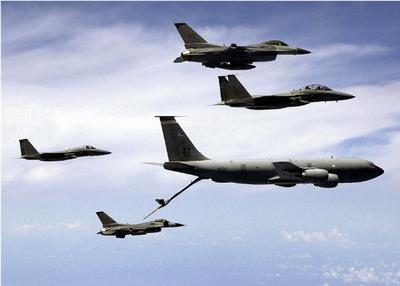
One of the methods being used is repowering aircraft with new engines. This has been done with the KC-135 aerial refueling fleet, and is currently underway on the C-5M Super Galaxy airlifter, reducing not only fuel burn but also maintenance cost.
 
The changes that have taken place are already having an effect, according to a report in Stars and Stripes. The USAF hauls 27% more cargo than it did five years ago, but fuel consumption has decreased 4% since 2006. The per-mile cost to haul a ton of cargo has decreased 21% in that time. Changing aircraft routing has also had an effect on the service’s fuel bill. By optimizing flight plans through friendly countries’ air space via diplomatic methods, the Air Force saved $2.4 million in 2011.

Reducing aircraft cruise speeds has also played a part; C-17 crews slowed down 16mph to 568mph and choose routes and altitudes to maximize fuel conservation. C-130 crews are reducing engine ground run time by cutting out non-essential procedures that take up time on the runway. The use of onboard auxiliary power units to run onboard systems instead of relying on electric power supplied by engines is saving a considerable amount of fuel as well. (USAF Photo)

FMI: www.af.mil

Advertisement

More News

Aero-TV: DeltaHawk’s Diesel Power Steps Into the Spotlight

Its Offerings Are Lighter, Cleaner, and Now Pushing Past 1,000nm on SAF Jet Fuel DeltaHawk’s diesel-powered aircraft lineup has seen incredible upgrades over the last few yea>[...]

NTSB Prelim: Mooney Aircraft Corp. M20K

The Airplane Experienced A Total Loss Of Engine Power On December 3, 2025, about 1600 central standard time, a Mooney Aircraft Corp. M20K, N57229, was substantially damaged when it>[...]

ANN FAQ: Turn On Post Notifications

Make Sure You NEVER Miss A New Story From Aero-News Network Do you ever feel like you never see posts from a certain person or page on Facebook or Instagram? Here’s how you c>[...]

ANN's Daily Aero-Linx (12.20.25)

Aero Linx: European Society of Aerospace Medicine (ESAM) As a pan-European, independent forum, it works to promote the safety and health of all persons involved in aviation and spa>[...]

Aero-News: Quote of the Day (12.20.25)

“We are excited to see Wisk achieve this milestone, and I’m so proud of the team that made it possible. The team at Wisk has built advanced technologies across flight c>[...]

blog comments powered by Disqus



Advertisement

Advertisement

Podcasts

Advertisement

© 2007 - 2025 Web Development & Design by Pauli Systems, LC

