Sun, May 08, 2016
New Software And Cockpit Displays Reduce Sonic Boom Noise Impact From Airplanes
Honeywell Aerospace is working with NASA’s Armstrong Flight Research Center to study the most effective way to visually inform pilots flying supersonic jets about sonic booms, a loud noise caused by current aircraft traveling faster than the speed of sound. Honeywell recently flight-tested new cockpit displays that help pilots see sonic booms before they happen so they can reroute and reduce the effects of aircraft noise over populated areas. By predicting sonic boom footprints, Honeywell will remove a key roadblock to speed up the introduction of supersonic travel and support one of NASA’s goals to modernize flight.
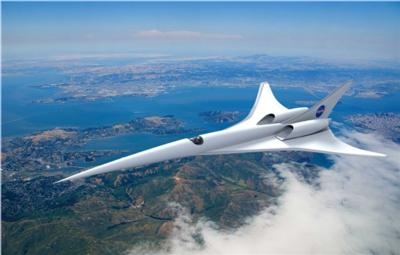
Early in 2015, Honeywell was awarded a two-year contract as part of NASA’s Commercial Supersonic Technology (CST) Project to aid in overcoming the issue of sonic booms as a roadblock to commercial supersonic flight. In their first year under the contract, Honeywell and NASA have designed and developed predictive software and display technology that has been successfully tested in flight over commercial airspace.
“NASA is committed to making supersonic flight over land a reality, and key to achieving this is to reduce the impact of sonic booms,” said Bob Witwer, vice president of Advanced Technology at Honeywell Aerospace. “Using the Honeywell User Experience design concept, our engineering team has tackled how to intuitively inform pilots about upcoming terrain, weather and more — now we are helping pilots predict and visualize noise to tackle sonic booms.”
“Important to our progress in reducing the sonic boom impact over land is to have a predictive sonic boom display in supersonic aircraft cockpits that ensures our future quiet supersonic aircraft remain below acceptable noise levels,” said Brett Pauer, NASA CST subproject manager at Armstrong Flight Research Center. “We have partnered with avionics companies like Honeywell to translate our NASA algorithms into an integrated avionics system that is tested and evaluated by pilots.”
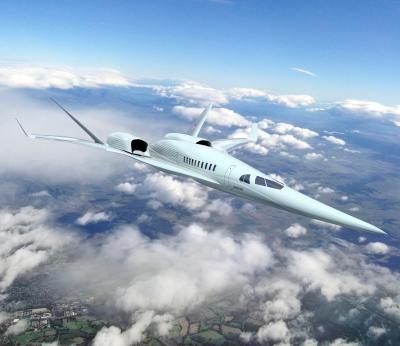
Honeywell’s predictive software and displays for supersonic jets are in ongoing development and testing with NASA. The conceptual designs used under NASA’s Commercial Supersonic Technology Project are tied to Honeywell’s Interactive Navigation (INAV) technology. INAV is the aerospace industry’s first system providing the simultaneous display of traffic, terrain, airspace, airways, airports and navigation aids. INAV software is designed to allow easy addition of new display formats to existing cockpits, and the predictive software for sonic booms takes full advantage of this feature, allowing it to be effortlessly incorporated into existing and future airplanes. Already in use on Honeywell Primus Epic integrated cockpits on Dassault, Gulfstream, Pilatus and Beechcraft aircraft, INAV will help make the next generation of supersonic flight a reality.
(Source: Honeywell news release. NASA images from file)
More News
“This vote sends an undeniable message to Air Transat management: We are unified, resolute, and have earned a contract that reflects today’s industry standards, not the>[...]
Aero Linx: Beech Aero Club The Beech Aero Club (BAC) is the international type club for owners and pilots of the Beech Musketeer aircraft and its derivatives, the Sport, Super, Sun>[...]
While Landing In The River, The Extended Landing Gear Contacted The Water And The Airplane Nosed Over, Resulting In Substantial Damage Analysis: The pilot of the amphibious airplan>[...]
From 2022 (YouTube Edition): Carrying the Legacy of The B-29 For Generations to Come We had a chance to chat with the Executive Director of B-29 Doc, Josh Wells, during their stop >[...]
Also: Cosmonaut Kicked Out, Airbus Scales Back, AF Silver Star, Russian A-60 Clobbered A Samaritan’s Purse humanitarian flight was hijacked on Tuesday, December 2, while atte>[...]



 Aero-News: Quote of the Day (12.07.25)


 See All