

NOAA Orion Penetrates, Photographs Eye of Jeanne | Aero-News Network
Aero-News Network
RSS icon RSS feed
podcast icon MP3 podcast
Subscribe Aero-News e-mail Newsletter Subscribe

Airborne Unlimited -- Most Recent Daily Episodes

Episode Date

Airborne-Monday

Airborne-Tuesday

Airborne-Wednesday Airborne-Thursday

Airborne-Friday

Airborne On YouTube

Airborne-SpecialEpisode-12.15.25

AirborneNextGen-
12.16.25

Airborne-Unlimited-12.10.25

Airborne-AffordableFlyers-12.11.25

AirborneUnlimited-12.12.25

AFE 2025 LIVE MOSAIC Town Hall (Archived): www.airborne-live.net

Sun, Sep 26, 2004

NOAA Orion Penetrates, Photographs Eye of Jeanne

Six insertions into the eye of the hurricane provide wealth of data

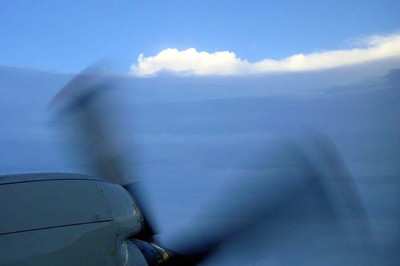
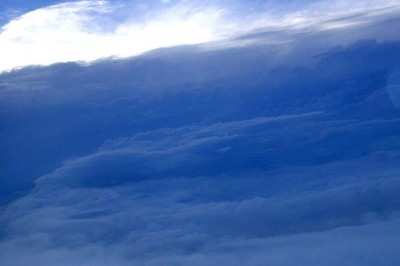
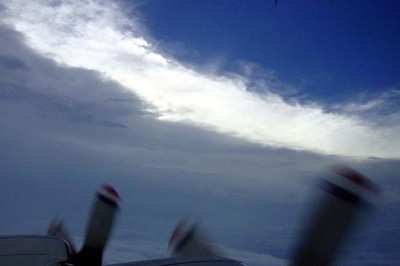
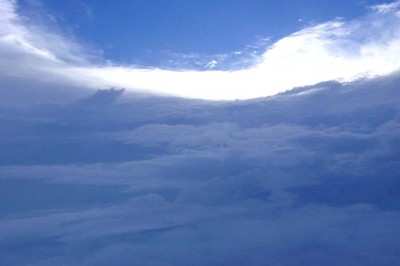
NOAA hurricane researchers flew into the eye of Hurricane Jeanne on Wednesday to gather data about the storm that is currently churning in the open Atlantic Ocean packing sustained winds near 105 mph. The scientists flew on the NOAA WP-3D Orion hurricane hunter aircraft at an altitude of 7,000 feet during the afternoon and early evening hours. The NOAA aircraft penetrated the eye of Hurricane Jeanne six times.

Scientists with the NOAA Hurricane Research Division said the large eye was remarkably clear aloft and well organized. Low clouds, most of which were stratocumulus below about 3,000 feet, filled most of the eye with an occasional cumulus extending up to or just above our flight-level.

NOAA scientists said an interesting aspect of the flight was the sea surface temperature field in the storm and to the west. SSTs in the eye and eyewall of Jeanne were about 79 degrees F (26 degrees C), probably a result of mixing from the slow-moving storm. The sea warmed to nearly 83 degrees F (28 degrees C) from 200-400 miles to the west of Jeanne's position Wednesday afternoon.

The NOAA Hurricane Research Division scientists speculated that the cooler SSTs were keeping Jeanne from intensifying significantly, and the dryer air was being kept away from the inner core.

NOAA is dedicated to enhancing economic security and national safety through the prediction and research of weather and climate-related events and providing environmental stewardship of the nation’s coastal and marine resources. NOAA is part of the U.S. Department of Commerce.

FMI: www.aoml.noaa.gov/hrd, www.aoc.noaa.gov

Advertisement

More News

Aero-News: Quote of the Day (12.18.25)

“These new aircraft strengthen our ability to respond quickly, train effectively and support communities nationwide. Textron Aviation has been a steadfast supporter in helpin>[...]

Classic Aero-TV: Viking Twin Otter 400--Bringing the DHC-6 Back Into Production

From 2011 (YouTube Edition): Rugged, Legendary, STOL Twin Makes A Comeback The de Havilland Twin Otter is an airplane with a long history, and it gained a reputation as a workhorse>[...]

NTSB Final Report: Rans Employee Flying Club Rans S-6ES Coyote II

A Wind Gust Lifted The Right Wing And The Airplane Turned To The Left Analysis: The pilot was departing from a 2,395-ft-long by 50-ft-wide turf runway. The pilot reported that afte>[...]

ANN FAQ: Submit a News Story!

Have A Story That NEEDS To Be Featured On Aero-News? Here’s How To Submit A Story To Our Team Some of the greatest new stories ANN has ever covered have been submitted by our>[...]

ANN's Daily Aero-Term (12.18.25): Braking Action Advisories

Braking Action Advisories When tower controllers receive runway braking action reports which include the terms “medium," “poor," or “nil," or whenever weather con>[...]

blog comments powered by Disqus



Advertisement

Advertisement

Podcasts

Advertisement

© 2007 - 2025 Web Development & Design by Pauli Systems, LC

