
AD: Aerospace Technologies | Aero-News Network
Aero-News Network
RSS icon RSS feed
podcast icon MP3 podcast
Subscribe Aero-News e-mail Newsletter Subscribe

Airborne Unlimited -- Most Recent Daily Episodes

Episode Date

Airborne-Monday

Airborne-Tuesday

Airborne-Wednesday Airborne-Thursday

Airborne-Friday

Airborne On YouTube

Airborne-Unlimited-12.01.25

AirborneNextGen-
12.02.25

Airborne-Unlimited-12.03.25

Airborne-FltTraining-12.04.25

AirborneUnlimited-12.05.25

AFE 2025 LIVE MOSAIC Town Hall (Archived): www.airborne-live.net

Tue, Jul 22, 2003

AD: Aerospace Technologies

AD NUMBER: 2003-14-20
MANUFACTURER:
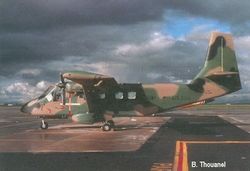
AeroSpace Technologies of Australia Pty Ltd.
SUBJECT: Airworthiness Directive 2003-14-20


SUMMARY: This amendment supersedes Airworthiness Directive (AD) 82-12-06, which applies to certain AeroSpace Technologies of Australia Pty Ltd. (ASTA) Models N22B and N24A airplanes. AD 82-12-06 currently requires repetitive visual inspections of all rudder control lever shaft assemblies for cracks and discrepancies, and, if cracks or discrepancies are found, it requires replacement with new or serviceable rudder control shafts, and a check of the fit of all rod end bearings in lever shafts. AD 82-12-06 also allows you to inspect all lever shafts by magnetic particle inspection or dye penetrant methods as terminating action for the repetitive visual inspections. This AD is the result of recent reports of failures of the upper control lever torque shaft due to fatigue loading on the affected airplanes, including those that included the terminating actions. This AD requires more detailed repetitive inspections (than there are in AD 82-12-06) of the upper and lower rudder pedal torque shafts and a one-time inspection for discrepancies in the thickness of the lever shaft side plates with appropriate follow-up action. The actions specified by this AD are intended to detect and correct cracks in the rudder control lever torque shafts and discrepancies in the thickness of the lever shaft side plates, which could result in failure of the rudder control lever torque shaft. Such failure could lead to reduced controllability of the airplane.

FMI: www.avantext.com/DailyADIndex.ASP?AD=20031420

Advertisement

More News

ANN's Daily Aero-Term (12.04.25): Cooperative Surveillance

Cooperative Surveillance Any surveillance system, such as secondary surveillance radar (SSR), wide-area multilateration (WAM), or ADS-B, that is dependent upon the presence of cert>[...]

ANN's Daily Aero-Linx (12.04.25)

Aero Linx: OX5 Aviation Pioneers Incorporated in 1955 as a Pa 501 (c)(3) Not for Profit Corporation, the OX5 Aviation Pioneers is dedicated to bringing before the public the accomp>[...]

NTSB Prelim: Extra Flugzeugproduktions EA 300/SC

The Pilot Appeared To Regain Control After Six Rotations And Attempted To “Fly Out” Inverted But Had Insufficient Altitude On November 8, 2025, at 1038 eastern standard>[...]

Classic Aero-TV: The Bally Bomber - The All Time Ultimate Warbird Replica?

From 2018 (YouTube Edition): Aero-News Talks With The Airplane's Builder One of the many unique airplanes at AirVenture 2018 was a 1/3-scale B-17 bomber built by Jack Bally, who ta>[...]

ANN's Daily Aero-Linx (12.05.25)

Aero Linx: Society of U.S. Army Flight Surgeons (SoUSAFS) The Society of US Army Flight Surgeons (SoUSAFS) serves to advance the science and art of Aerospace Medicine and its allie>[...]

blog comments powered by Disqus



Advertisement

Advertisement

Podcasts

Advertisement

© 2007 - 2025 Web Development & Design by Pauli Systems, LC

