
NASA-Funded Sounding Rocket Mission Hopes To Learn What Makes Up A Supernova | Aero-News Network
Aero-News Network
RSS icon RSS feed
podcast icon MP3 podcast
Subscribe Aero-News e-mail Newsletter Subscribe

Airborne Unlimited -- Most Recent Daily Episodes

Episode Date

Airborne-Monday

Airborne-Tuesday

Airborne-Wednesday Airborne-Thursday

Airborne-Friday

Airborne On YouTube

Airborne-Unlimited-12.08.25

AirborneNextGen-
12.09.25

Airborne-Unlimited-12.10.25

Airborne-AffordableFlyers-12.11.25

AirborneUnlimited-12.12.25

AFE 2025 LIVE MOSAIC Town Hall (Archived): www.airborne-live.net

Mon, May 11, 2015

NASA-Funded Sounding Rocket Mission Hopes To Learn What Makes Up A Supernova

Will Study X-Rays Emitting From A Phenomenon In The Cygnus Loop

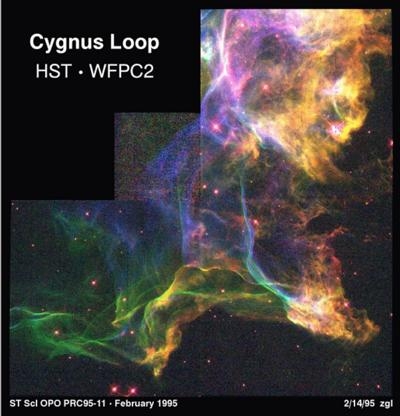
In early May 2015, a NASA-funded sounding rocket will be ready to launch, carrying new technology to peer at the X-rays streaming from a supernova remnant called the Cygnus Loop – and assess what the debris from this 20,000-year-old explosion is made of. Flying such technology will also open the door to probe the deep universe for missing matter believed to exist, but yet to be observed.

The mission, called the Off-plane Grating Rocket for Extended Source Spectroscopy, or OGRESS, will lift off from the White Sands Missile Range in New Mexico. The launch window opens on May 2, 2015, at 4:30 a.m. EDT. OGRESS will fly on board a Terrier Black Brant rocket for a 15-minute flight that allows for five minutes of observations of the Cygnus Loop.

"Supernovae remnants are rich with astrophysical features," said Randall McEntaffer, principal investigator for OGRESS at the University of Iowa in Iowa City. "We want to show that we can resolve the details of those features – of an extremely large, diffuse object -- in high resolution."

At the heart of the OGRESS mission lies a series of optical components, etched with a specific pattern. McEntaffer and his team specialize in making these optics, called gratings. During its observation period, OGRESS will pass incoming soft X-rays across this grating, which splits the X-rays into individual wavelengths of light, to create patterns known as spectra. Centuries of spectroscopic research have taught scientists which particles emit which wavelengths of light, so these spectral patterns can show what kinds of matter are present in something like the Cygnus Loop -- or anyplace else.

"Once we know the gratings work well for this astrophysical source, then we can start probing the deep universe," said McEntaffer.

McEntaffer wants to use similar technology to search for missing matter in distant space. Astrophysicists can measure how much material is present in the universe based on the amount of light observed, but they haven't yet been able to fully categorize the composition of all that material. McEntaffer hopes that eventually he can use their grating fitted to a larger telescope with an extended time in space to identify and accurately measure the material out in the distant universe.

In the meantime, the OGRESS team will take what they learn from this flight and seek to improve their gratings. Another flight is scheduled for 2018 to observe the star Capella.

(Image provided by NASA)

FMI: www.nasa.gov

Advertisement

More News

ANN's Daily Aero-Linx (12.12.25)

Aero Linx: Commercial Aviation Safety Team (CAST) Founded in 1997, the Commercial Aviation Safety Team (USCAST) has developed an integrated, data-driven strategy to reduce the comm>[...]

ANN's Daily Aero-Term (12.12.25): Land And Hold Short Operations

Land And Hold Short Operations Operations that include simultaneous takeoffs and landings and/or simultaneous landings when a landing aircraft is able and is instructed by the cont>[...]

ANN FAQ: How Do I Become A News Spy?

We're Everywhere... Thanks To You! Even with the vast resources and incredibly far-reaching scope of the Aero-News Network, every now and then a story that should be reported on sl>[...]

NTSB Final Report: Cirrus Design Corp SF50

Pilot’s Inadvertent Use Of The Landing Gear Control Handle Instead Of The Flaps Selector Switch During The Landing Rollout Analysis: The pilot reported that during the landin>[...]

Airborne 12.08.25: Samaritan’s Purse Hijack, FAA Med Relief, China Rocket Fail

Also: Cosmonaut Kicked Out, Airbus Scales Back, AF Silver Star, Russian A-60 Clobbered A Samaritan’s Purse humanitarian flight was hijacked on Tuesday, December 2, while atte>[...]

blog comments powered by Disqus



Advertisement

Advertisement

Podcasts

Advertisement

© 2007 - 2025 Web Development & Design by Pauli Systems, LC

