Sat, Feb 13, 2021
AD 2021-04-04 Retains The Requirements Of AD 2020-19-02 And Also Clarifies The Applicability
The FAA is superseding Airworthiness Directive (AD) 2020-19-02, which applied to certain Airbus Helicopters (previously Eurocopter France) Model SA330J helicopters.
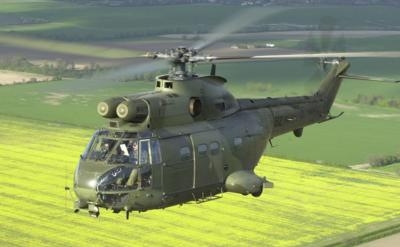
AD 2020-19-02 required repetitively inspecting affected tail rotor (T/R) blades and depending on the inspection results, repairing or replacing the T/R blade. AD 2020-19-02 also prohibited installing an affected T/R blade unless it passed the inspections. This AD retains the requirements of AD 2020-19-02 and also clarifies the applicability, clarifies the affected T/R blades in the required actions, reduces a compliance time, and corrects the prohibition requirement. This AD was prompted by the determination that these corrections are necessary. The FAA is issuing this AD to address the unsafe condition on these products. This AD becomes effective March 1, 2021.
Supplementary Information: The FAA issued AD 2020-19-02, Amendment 39-21243 (85 FR 59416, September 22, 2020) (AD 2020-19-02), for certain Airbus Helicopters (previously Eurocopter France) Model SA330J helicopters. AD 2020-19-02 required, for each T/R blade part number (P/N) 330A12-0005-(all dash numbers) and 330A12-0006-(all dash numbers), repetitively accomplishing a visual and in-depth inspection for debonding and eddy current inspecting for a crack. If there was debonding within allowable limits, AD 2020-19-02 required repairing or replacing the T/R blade. If there was debonding that exceeded allowable limits or a crack, AD 2020-19-02 required replacing the T/R blade.
AD 2020-19-02 also prohibited installing an affected T/R blade unless it passed the inspections. AD 2020-19-02 was prompted by EASA AD No. 2016-0059-E, dated March 22, 2016 (EASA AD 2016-0059-E), issued by the EASA, which is the Technical Agent for the Member States of the European Union, to correct an unsafe condition for Airbus Helicopters (formerly Eurocopter, Eurocopter France, Aerospatiale) Model SA 330 J helicopters. EASA AD 2016-0059-E retains the requirements of Direction Générale de l'Aviation Civile (DGAC) France AD 87-032-052(B)R3, dated January 23, 1991, which it supersedes, and also mandates improved service instructions. EASA advises of two reports of cracked metal T/R blade skin, which subsequently led to rotor blade vibrations and forced landing of the helicopter. According to EASA, this condition, if not addressed, could result in additional occurrences of T/R blade structural damage, possibly resulting in significant vibrations and reduced control of the helicopter.
More News
Ultrahigh Frequency (UHF) The frequency band between 300 and 3,000 MHz. The bank of radio frequencies used for military air/ground voice communications. In some instances this may >[...]
During The 7 Second Descent, There Was Another TAWS Alert At Which Time The Engine Remained At Full Power On October 24, 2025 at 2115 mountain daylight time, a Cirrus SR22T, N740TS>[...]
From 2009 (YouTube Edition): Educational Organization Aims to Inspire by Sharing Tuskegee Story Founding leader Don Hinz summarized the Red Tail Project’s mission in simple, >[...]
“This feels like an important step since space travel for people with disabilities is still in its very early days... I’m so thankful and hope it inspires a change in m>[...]
Also: New Katanas, Kern County FD Training, IndiGo’s Botched Roster, MGen. Leavitt Named ERAU Dean The Australian Transportation Safety Bureau (ATSB) has wrapped up its inves>[...]



 ANN's Daily Aero-Term (12.19.25): Ultrahigh Frequency (UHF)


 See All