
RAF Museum Readies For Restoration Of German WWII Aircraft | Aero-News Network
Aero-News Network
RSS icon RSS feed
podcast icon MP3 podcast
Subscribe Aero-News e-mail Newsletter Subscribe

Airborne Unlimited -- Most Recent Daily Episodes

Episode Date

Airborne-Monday

Airborne-Tuesday

Airborne-Wednesday Airborne-Thursday

Airborne-Friday

Airborne On YouTube

Airborne-Unlimited-12.01.25

AirborneNextGen-
12.02.25

Airborne-Unlimited-11.19.25

Airborne-AffordableFlyers-11.20.25

AirborneUnlimited-11.21.25

LIVE MOSAIC Town Hall (Archived): www.airborne-live.net

Mon, May 27, 2013

RAF Museum Readies For Restoration Of German WWII Aircraft

Specialized Equipment Developed For The Effort

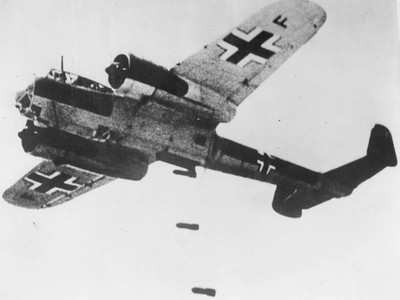
A team of restoration experts is currently hard at work preparing to salvage a unique World War II aircraft from the floor of the English Channel. Using cutting edge restoration techniques within a purpose-built polytunnel from First Tunnels, the team hopes to have the rare Dornier 17 ready for exhibition within two years.

The RAF Museum in Hendon is behind the ambitious project to raise the aircraft and end its watery exile. The project is made even more significant by the fact that this particular aircraft is the last of its kind, rendering it a valuable addition to the museum's collection and a thrilling historical exhibit for future display.

The Dornier 17 was central to the German war effort in its role as a Luftwaffe bomber used against the allies in the Battle of Britain. Now, the only surviving example of this iconic aircraft is being salvaged from beneath 50ft of water at Goodwin Sands off the coast of Kent. However, raising the aircraft is only the start of the long road to restoration. A team of specialists has devised a conservation program for the Dornier 17 that involves the use of chemicals engineered to rapidly stop corrosion.

According to a First tunnels news release, a group of experts at Imperial College London came up with the technique that will stabilize the metal components of the Dornier 17 after 70 years under water. An assortment of specialists have already been involved in the recovery operation to date, including the team at First Tunnels, who have constructed two large polytunnels at the museum's conservation center in Cosford, Shropshire where the chemical treatment will take place.

The process of spraying the aircraft with chemicals in a purpose-built polytunnel environment has enabled conservationists to cut the cost of the operation by giving them an economical alternative to the traditional method of immersing the parts in large and expensive containers. The initial stage of the restoration, which involves ending the negative effects of corrosion, will take around 18 months to complete.

(Dornier 17 image from file)

FMI: www.firsttunnels.co.uk, www.rafmuseum.org.uk

Advertisement

More News

ANN's Daily Aero-Term (11.29.25): Waypoint

Waypoint A predetermined geographical position used for route/instrument approach definition, progress reports, published VFR routes, visual reporting points or points for transiti>[...]

ANN's Daily Aero-Linx (11.29.25)

Aero Linx: Sentimental Journey to Cub Haven Sentimental Journey Flyin began in 1986 with a group of dedicated volunteers working to provide a sentimental return to Lock Haven, the >[...]

NTSB Prelim: Jabiru USA Sport Aircraft LLC J230-SP

The Pilot Would Often Fly Over Their House At A Low Altitude And That Family Members Would Go Outside To Wave On November 14, 2025, at 1708 eastern standard time, a Jabiru USA Spor>[...]

Classic Aero-TV: Crafting The Future of eVTOL Infrastructure

From 2024 (YouTube Edition): Volatus Infrastructure Paves The Way The name “Volatus” seems to be everywhere these days, popping up in a series of partnerships and proje>[...]

Klyde Morris (11.28.25)

Fortnite Conquers All, Klyde FMI: www.klydemorris.com>[...]

blog comments powered by Disqus



Advertisement

Advertisement

Podcasts

Advertisement

© 2007 - 2025 Web Development & Design by Pauli Systems, LC

