Fri, Aug 17, 2012
'Ghost Planes' Could Appear On Your ADS-B-Equipped EFIS
Every time new technology comes along, someone somewhere begins an effort to see how it can be compromised, manipulated, and sometimes even destroyed. And apparently NextGen is no exception.
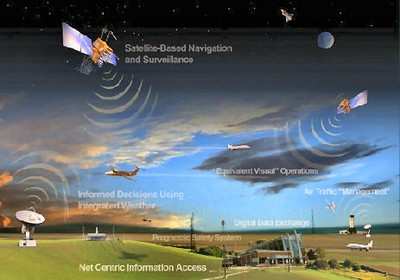
In a story appearing on NPR, a Canadian computer hacker named Brad Haines said that the data transmitted by ADS-B is unencrypted and unauthenticated. Those are bad words in the computer security world. Haines, who is known in the online community as RenderMan, found he could "spoof" the signals and make your TIS see airplanes where there are none.
Haines imagined a scenario where a hacker suddenly added 50 "ghost airplanes" to an ATC screen. He said that such an attack could make a pilot swerve to miss airplanes that aren't there, or potentially shut down an airport. An hours worth of disruption at a major airport could have ripple effects that could spread worldwide, he said.
Haines and another hacker named Nick Foster created an ADS-B spoof using the FlightGear flightsim game. They say if they had hooked the game up to a low-power transmitter, they could have convinced controllers that they were an actual airplane. The experiment has reportedly been duplicated in France. Both Haines and the French hacker ... Romanian grad student Andrei Costin ... have published papers and made presentations about their work.
The U.S. Air Force has expressed concerns about the potential for "spoofing" NextGen. One cyberwarfare student ... Maj. Donald McCallie ... wrote in a paper last year that NextGen is "on a collision course with history." The FAA has reportedly not yet released the results, or even initial data, from its own security tests. It has been mostly quiet on the reports coming from the Air Force and the hackers. In a one-paragraph statement, the FAA said that an "ADS-B security action plan identified and mitigated risks and monitors the progress of corrective action. These risks are security sensitive and are not publicly available."
The FAA told NPR that it will use a system called "multilateration" to discriminate between real and fake airplanes on ADS-B receivers. But the system requires multiple receivers analyzing every ADS-B signal.
More News
Outboard Section Of The Right Wing And The Right Flap Separated In Flight And The Airplane Impacted A Farm Field Analysis: The pilot was approaching his destination airport under i>[...]
Final Approach Fix The fix from which the final approach (IFR) to an airport is executed and which identifies the beginning of the final approach segment. It is designated on Gover>[...]
"Our choice of when to respond, how to respond and on which targets to respond is a consideration that we make every time... Netanyahu also noted that anyone attacking Israel &ldqu>[...]
Estimated (EST) When used in NOTAMs “EST” is a contraction that is used by the issuing authority only when the condition is expected to return to service prior to the e>[...]
Aero Linx: Coalition of Airline Pilots Associations (CAPA) The Coalition of Airline Pilots Associations (CAPA) is the world’s largest pilot trade association representing ove>[...]



 NTSB Final Report: Cessna 177B


 See All